
Nickel Plating on Copper
Copper-plated nickel
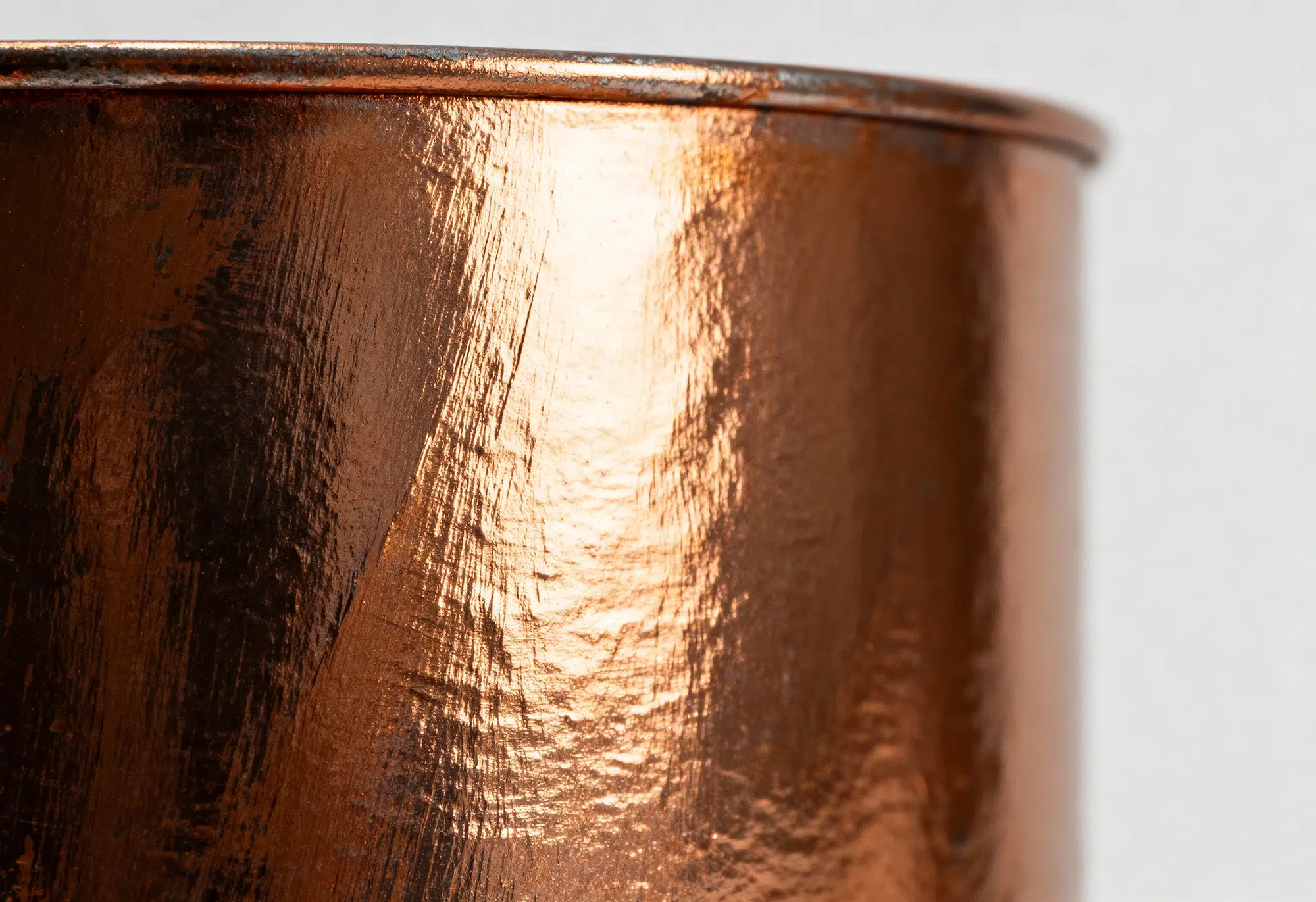
Nickel naturally deposits on copper and its alloys. Beyond this compatibility, this treatment plays a vital role. It provides long-lasting protection for surfaces against oxidation and serves as a reliable undercoat prior to gold plating, particularly for connector components. At Wipelec, we have been putting our expertise in the treatment of copper and its alloys to work for our customers since 1984.
Connectors & Electronics
A nickel undercoat that ensures optimal preparation before gold plating connectors, contacts, and pins.
Electrical Engineering
Protection of busbars and electrical distribution components, while maintaining their conductivity.
Faucets & Decor
Nickel plating used as a base coat prior to decorative chrome plating of brass and bronze parts.
Instrumentation
Processing of copper components with high requirements for dimensional accuracy and finish durability.
Why nickel-plate copper?
Copper and its alloys (brass, bronze) are valued for their electrical and thermal conductivity, but they oxidize and tarnish when exposed to air, and wear down with repeated contact. Nickel plating provides them with lasting protection while preparing the part for subsequent finishing processes.
Anti-corrosion & anti-tarnish
The nickel plating prevents copper from oxidizing in air and in humid environments, and preserves the appearance of the part over time.
Diffusion barrier
Underneath a gold or silver plating, nickel prevents copper from migrating through the top layer and causing it to tarnish.
Wear resistance
Nickel increases the surface hardness of copper or brass parts subjected to repeated friction or insertion.
Consistent finish
Matte or glossy finish; a stable, uniform base prior to decorative chrome plating or gold plating of connectors.
A copper-nickel plating project?
Please send us your plans or specifications. Our team will get back to you as soon as possible with a customized technical proposal and quote.

Why is nickel essential for copper?
Unlike aluminum, copper and its alloys (brass, bronze) provide excellent natural adhesion for nickel. In fact, a simple acid pickling treatment immediately before immersion is sufficient, without the need for a zinc-plating step. The key consideration lies elsewhere: copper re-oxidizes very quickly in the air between the pickling and the plating bath, which requires a rapid and carefully controlled sequence of steps.
The second, more strategic challenge concerns components intended to be gold- or silver-plated. Copper tends to diffuse through a thin layer of gold over time and under the influence of temperature, which causes the contact to tarnish and degrades its conductivity. A nickel undercoat between the copper and the gold acts as a diffusion barrier, blocking this migration and extending the component’s functional lifespan.
It is this barrier function—rather than simply providing corrosion protection—that explains why nickel is consistently used in the copper-nickel-gold layers of electrical connectors and contacts.
Our Process
To achieve a neat, long-lasting finish, the process must be carried out perfectly.
Receiving & Review
Analysis of the design, the copper alloy, and the function of the coating (protection or barrier).
Preparation
Alkaline degreasing and cleaning suitable for the alloy.
Timed Stripping
Acid etching immediately followed by a rinse to prevent reoxidation.
Nickel Plating
Chemical or electrolytic plating, depending on the desired thickness and function.
Control & Traceability
X-ray fluorescence thickness measurement, adhesion testing, packaging, and tracking sheet.
Why Choose Wipelec?
40 years of practice
We specialize in various surface treatments: electrolytic nickel plating, silver plating, etc.
A Masterful Sequence
The time interval between stripping and immersion is monitored for each batch.
Full traceability
From the receipt of the shipment to final packaging, every step is documented.
A technical contact person
You'll be communicating directly with the workshop, not with a call center.
Learn more about copper plating
Do you have questions about copper plating? Find the answers to the most frequently asked questions here!
Chemical or electrolytic nickel plating on copper?
The choice depends on the part's geometry, the purpose of the coating (diffusion barrier, protection, appearance), and the production volume.
| Criterion | Electrolytic nickel plating | Electrolytic nickel plating |
|---|---|---|
| Consistency | Consistent thickness, including in recesses, threads, and multi-pin connectors | Variable thickness: Edges and exposed areas receive more material than recesses |
| Ideal for | Diffusion barrier under gold plating, complex connector components | Simple parts, high-volume production, undercoat prior to decorative chrome plating |
| Contact Conductivity | Good balance between hardness and conductivity depending on phosphorus content | Purer nickel, slightly higher conductivity |
| Cost / Timeframe | A more controlled process, which generally takes longer | Faster and more cost-effective for large volumes |
Does nickel-plated copper rust or oxidize?
A continuous, pore-free nickel deposit effectively protects the underlying copper from oxidation and tarnishing when exposed to air. The durability of this protection depends on the thickness of the deposit and the absence of surface defects.
Why apply nickel before gilding on copper?
Copper tends to diffuse through a thin layer of gold over time, causing the gold plating to tarnish and degrading contact conductivity. A nickel undercoat acts as a diffusion barrier: it blocks this migration, which is a critical issue in electronic connectors.
What is the thickness of the nickel coating on copper?
The thickness generally ranges from 2 to 15 microns depending on the application: a few microns as a diffusion barrier under a connector plating layer, and more for corrosion protection or enhanced mechanical strength.
Let's talk about your copper piece
Send us your plan or request, and we'll get back to you as soon as possible with technical advice on the most suitable process and an estimated timeline.
Copper plating is a very broad topic.
All subjects
At Wipelec, we offer you recognized expertise in the surface treatment of copper alloys, particularly through our expertise in electroless nickel plating. With a deep understanding of the unique properties of this material, our teams implement rigorous processes that ensure excellent deposit adhesion, long-lasting corrosion protection, and performance tailored to the demands of the most technically demanding industries.