
Glass and metal bonding
As a specialist in hermetic connections, WIPELEC designs and manufactures highly reliable glass-to-metal sealing solutions. Our technologies meet the most demanding requirements in microelectronics, microwave technology, power electronics, high-pressure applications, and signal measurement.
What is glass-to-metal bonding?
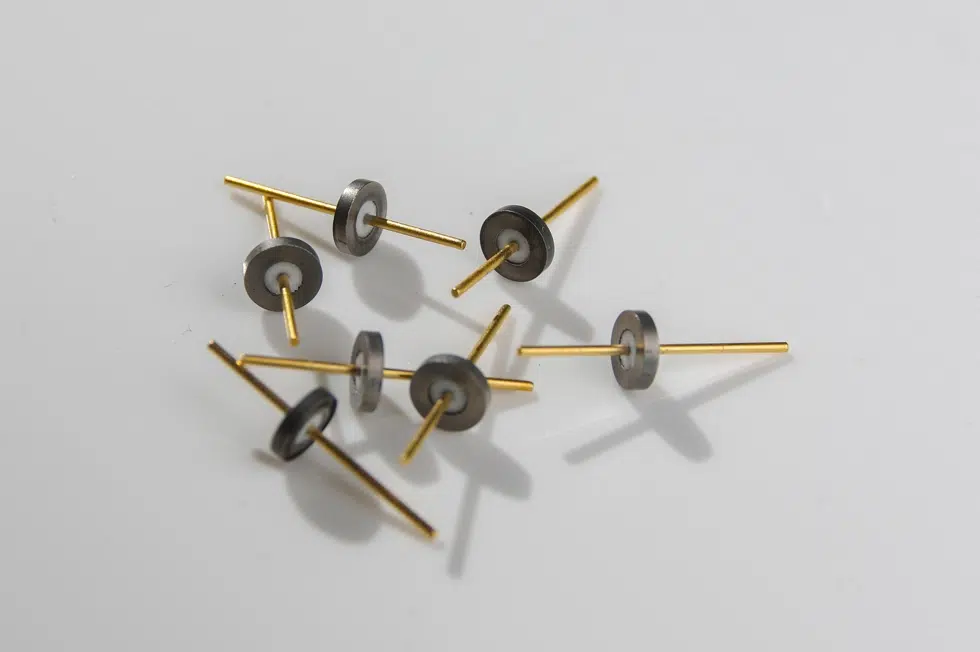
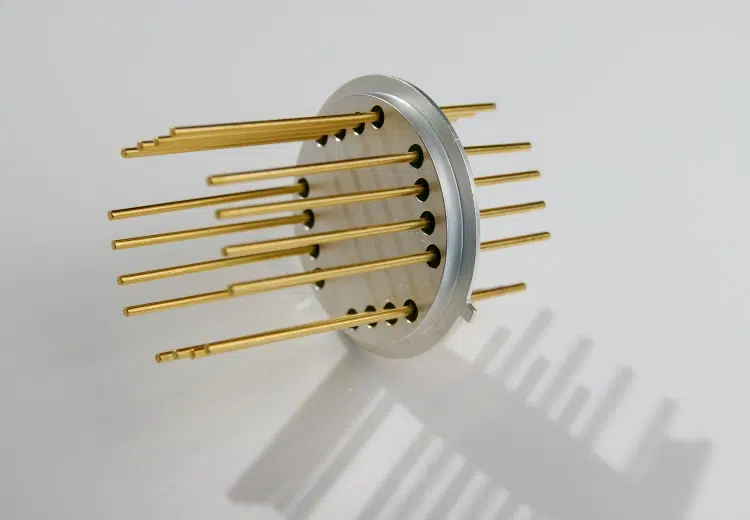
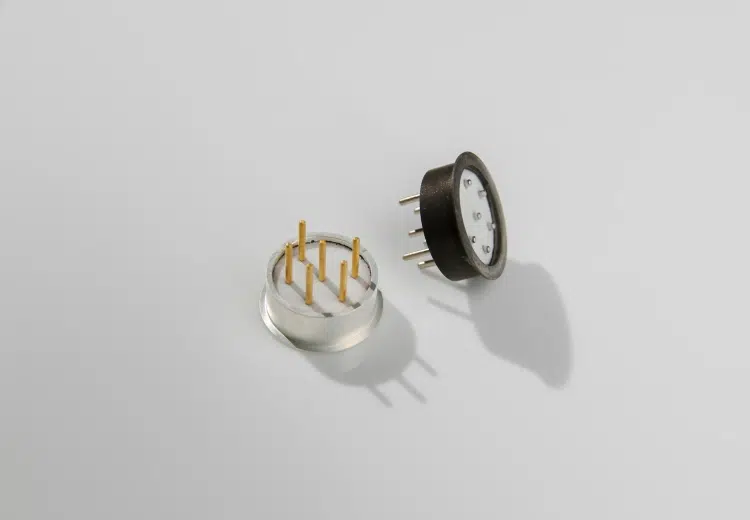
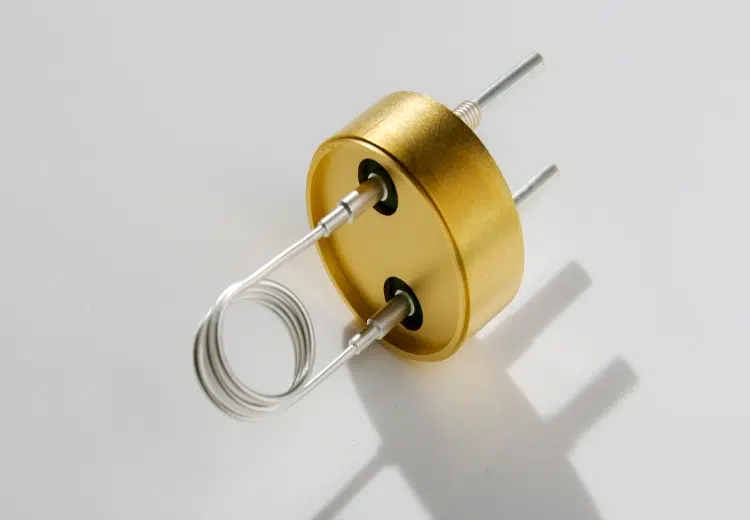
Glass-to-metal sealing is a process that involves heating a metal assembly to melt the glass and create a perfectly hermetic bond between the two materials. This technology is used to manufacture hermetic electrical feedthroughs, connectors, optical components, and implantable medical devices.
Designed for harsh environments and high-performance applications, glass-to-metal sealing ensures long-term reliability. Its primary purpose is to enable the secure transmission of electrical or optical signals through sealed enclosures, including those under vacuum or high pressure.
Resources and equipment
- Gas-fired bell-type furnaces (1100°C)
- Tunnel kiln (1000°)
- Drying Oven
- Leak detector
- Megohmmeter
Available materials
- Titanium
- Dilver P1
- Stainless steel
- Steel
- Inconel
- Copper
- Iron-Nickel Alloys
- Molybdenum
Why can glass-to-metal bonding make all the difference?
Superior durability
Long-term reliability, which improves system security and reduces total cost of ownership.
Resistance to extreme temperatures
Operates at temperatures ranging from -200 °C to +1000 °C, or even higher depending on the configuration.
Chemically resistant construction
Designs suitable for harsh environments: acidic or alkaline environments, oils, gases, and electrolytes.
High pressure resistance
Glass-to-metal feedthroughs can withstand pressures of up to 4,000 bar.
Types of glass-to-metal bonding
At WIPELEC, we offer several glass-to-metal sealing technologies. The choice of process depends directly on the intended application and the requirements of the hermetically sealed electrical connector.
Sealing granted
Based on the similar thermal expansion coefficients of glass and metal, this process relies on the creation of an oxide layer to ensure adhesion. It is particularly well-suited for signal processing applications that require complex designs and a very high level of industrial expertise.
Compression setting
The seal is achievedby mechanically compressing the metal body against the glass.
This type of sealing is preferred for power and signal processing applications that are exposed to extremely high temperatures, high pressures, or corrosive environments.
Titanium sealant
This process can be viewed as a combination of the two previous technologies. It combines the principles of interference fit and compression fit, leveraging the specific properties of titanium. This type of fit offers excellent mechanical stability, very good resistance to thermal stress, and high reliability in demanding environments, particularly when operating conditions require high levels of sealing performance and durability.
Learn more about glass-to-metal bonding
Do you have questions about glass-to-metal sealing? Find answers to the most frequently asked questions here!
How does glass-to-metal sealing differ from other sealing solutions?
Unlike solutions based on flexible materials or resins, glass-to-metal bonding does not age or deform and retains its properties over time. This stability ensures a reliable, maintenance-free seal, even under severe thermal, mechanical, or chemical stress. It is a solution designed for durability and repeatability.
How long does a glass-to-metal seal last?
When properly designed and manufactured, a glass-to-metal seal has a very long service life, often matching that of the equipment in which it is installed. Its structure makes it resistant to aging, climatic variations, and chemical exposure. It is therefore a reliable solution for long-term installations or those that are difficult to access.
When should glass-to-metal bonding be incorporated into a project?
It is strongly recommended to incorporate glass-to-metal bonding into the design phase. This allows for the optimization of material selection, part geometry, and the overall integration of the component. Planning ahead minimizes future constraints and ensures a technically sound and durable solution.
At what volume does this process become relevant?
Glass-to-metal sealing is suitable for prototypes, small production runs, and large-scale industrial production. The key is to optimize the design early on to reduce unit costs during production.
Why does the glass-to-metal seal protect against moisture and gases?
Glass, an inorganic material, forms an airtight barrier against the infiltration of moisture, gases, or condensation, which exceeds the capabilities of polymer seals, especially in harsh environments.
In which industrial sectors are these seals found?
Glass-to-metal seals are used in a wide range of fields, including electronics, high-temperature sensors, aerospace, oil and gas, energy storage (batteries), implantable medical devices, nuclear power, telecommunications, and scientific instrumentation