
Electrolytic copper plating
What is electrolytic copper plating?
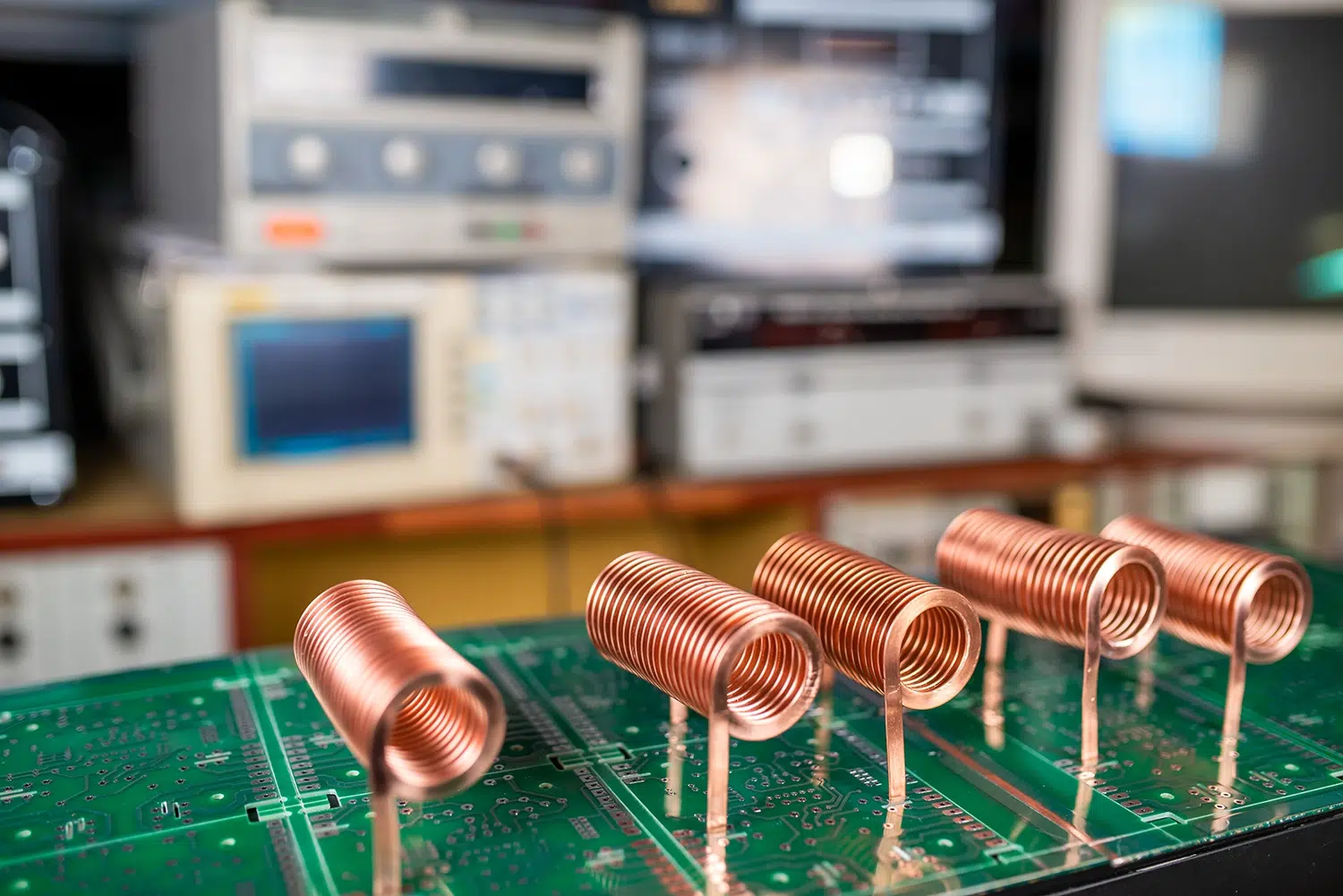
Electrolytic copper plating is an electrochemical surface treatment process that involves depositing a thin layer of pure copper onto a metal workpiece. Specifically, an electric current is used to transport the copper from a source to the surface to be coated.
The workpiece is immersed in a bath called an electrolyte, a liquid solution containing copper ions (often based on copper sulfate). We also place a pure copper electrode in this bath.
When an electric current flows, two phenomena occur simultaneously:
- The anode (the copper electrode) gradually dissolves in the solution and releases copper ions.
- The cathode (the part to be plated) attracts these copper ions, which are deposited there in the form of solid metal.
As a result of these processes, a layer of copper gradually and evenly forms on the part.
The quality of the copper plating depends on several key factors. First, the composition of the electrolyte: a solution of copper sulfate in demineralized water is the most common, but there are also acidic or alkaline baths, depending on the application. The copper concentration and pH directly affect the adhesion and appearance of the deposit.
Next, the electrical settings play a key role. The current’s intensity and voltage determine the rate at which the copper is deposited, as well as the thickness of the resulting layer. Incorrect settings can result in an uneven or brittle deposit.
Finally, the bath temperature must be controlled. A stable temperature helps prevent surface defects and ensures a uniform and durable copper plating.
Electrolytic copper plating methods
At Wipelec, we rely on state-of-the-art electroplating lines, equipped with numerous processing stations, to ensure a controlled and uniform copper electroplating process. Our facilities can be tailored to your needs, whether for barrel plating or rack plating.
Barrel copper plating
Barrel plating involves treating loose parts placed in a rotating barrel immersed in a copper bath. An electric current causes a layer of copper to deposit evenly on each part.
- Ideal for small parts such as screws, connectors, or accessories
Frame copper plating
Frame plating involves securing individual parts to supports, known as frames, before immersing them in a copper bath. An electric current is then used to deposit a layer of copper in a precise and controlled manner.
- Recommended for larger parts or those with complex shapes that require precise and uniform coating.
Why use this surface treatment?
Optimal electrical and thermal conductivity
Copper is an excellent conductor. Electroplating therefore improves the performance of parts used in electrical or electronic applications by ensuring reliable and stable current flow.
Adherence to follow-up treatments
Copper serves as an excellent primer for other treatments (nickel plating, chrome plating, painting). It helps produce more durable, higher-quality finishes.
Uniformity and precision of deposition
The electrolytic process allows for precise controlof the copper thickness and produces a uniform deposit, even on complex parts. This ensures consistent quality that meets technical requirements.
Corrosion protection
Copper plating forms a protective barrier that limits material oxidation. It thus extends the service life of parts, particularly when they are exposed to moisture or harsh environments.
The electrolytic copper plating process
Electrolytic copper plating begins with a thorough preparation of the parts. Cleaning and degreasing remove oils, oxides, and impurities that could impair adhesion. This step is often followed by acid etching or surface activation to ensure the metal is perfectly prepared to receive the copper deposit.
The parts are then immersed in an electrolytic bath containing copper ions. Under the influence of an electric current, copper is deposited gradually and in a controlled manner onto the surface. The duration of the process, the current intensity, and the composition of the bath are precisely adjusted to achieve the desired thickness and quality of the deposit.
After plating, the parts undergo several rinsing stages, typically using demineralized water, to remove all traces of electrolyte. They are then dried and, if necessary, polished to bring out the copper’s shine and improve the finish.
Finally, the process includes a controlled management system for residues from the baths. These byproducts, which are sometimes rich in recoverable metals, are treated with both environmental and industrial considerations in mind, ensuring an efficient and responsible process.
Why choose Wipelec for electrolytic copper plating?
Wipelec supports you in carrying out your electrolytic copper plating projects, whether simple or complex, for single units or large-scale production runs. Thanks to our expertise and mastery of surface treatment processes, we guarantee tailored support—from assessing your needs through to production—to ensure a precise, consistent, and durable result that meets the specific requirements of your industry.

Learn more about this treatment
Do you have questions about electrolytic copper plating? Find answers to the most frequently asked questions here!
Is electrolytic copper plating suitable for all metal parts?
Electrolytic copper plating does not adhere uniformly to all metals, even though it can be adapted to a wide variety of substrates.
In practice, it works very well on conductive metals such as steel or copper, which allow the plating to adhere well. Other materials, such as zamak or zinc , can also be copper-plated, but they generally require pretreatment to ensure adhesion and prevent defects. Aluminum and stainless steel, for example, require more specific preparations due to their oxide layers or natural passivity.
Without these steps, the copper may not adhere properly or may peel off quickly. Non-conductive materials such as plastic or wood cannot be copper-plated directly unless they are first metallized.
In summary, the process is highly versatile but depends heavily on the nature of the material and the surface preparation.
What is the difference between copper electrolysis and electrolytic copper plating?
Copper electrolysis is based on the general principle of using an electric current to circulate and transform copper ions in a solution. It is a fundamental chemical process used for the extraction, purification, and deposition of copper.
Electrolytic copper plating is a practical application of this principle, which involves intentionally depositing a thin layer of copper onto a metal part to impart specific properties such as conductivity, corrosion protection, or a bonding base for further treatments.
In this case, we are using the same physical phenomenon of electrolysis, but in an industrial setting and with the specific goal of surface treatment. The main difference, therefore, lies between a general scientific principle and its practical application in manufacturing.
Why is copper used as a plating layer?
Copper is often used as a plating layer in electrolytic copper plating because of its particularly desirable physical and chemical properties.
First of all, it is an excellent electrical conductor, making it an ideal material for electronic applications or parts that require good conductivity.
In addition, it can be easily deposited by electrolysis, which allows for the formation of uniform, consistent layers on a wide variety of metal substrates.
Copper also plays an important role as a bonding layer, as it promotes the adhesion of subsequent coatings such as nickel or chromium.
In addition, it offers some protection against corrosion, although it is often used as an intermediate coat rather than a topcoat.
Finally, it improves the appearance of the room by providing a smooth, even surface, which is essential for subsequent decorative or technical treatments.
Can copper plating be used as a base layer for other coatings?
Copper plating is very often used as a base layer for other metal coatings, as it plays a crucial role as an intermediate layer between the raw material and the final finish.
First, copper improves the overall adhesion of the coating system, particularly on parts with surfaces that are difficult to treat directly. It then helps smooth out microscopic surface imperfections, ensuring a more uniform finish for the top layers.
In industrial processes, it is frequently applied prior to nickel plating or chrome plating, as these coatings require a perfectly stable substrate to prevent peeling or cracking.
It is also used prior to silver plating in certain technical or decorative applications to ensure better adhesion and a more uniform finish.
Related surface treatments
Would you like to learn more about our other surface treatments? Find out more and explore all our solutions!