
Tinning
Surface treatment by tin plating
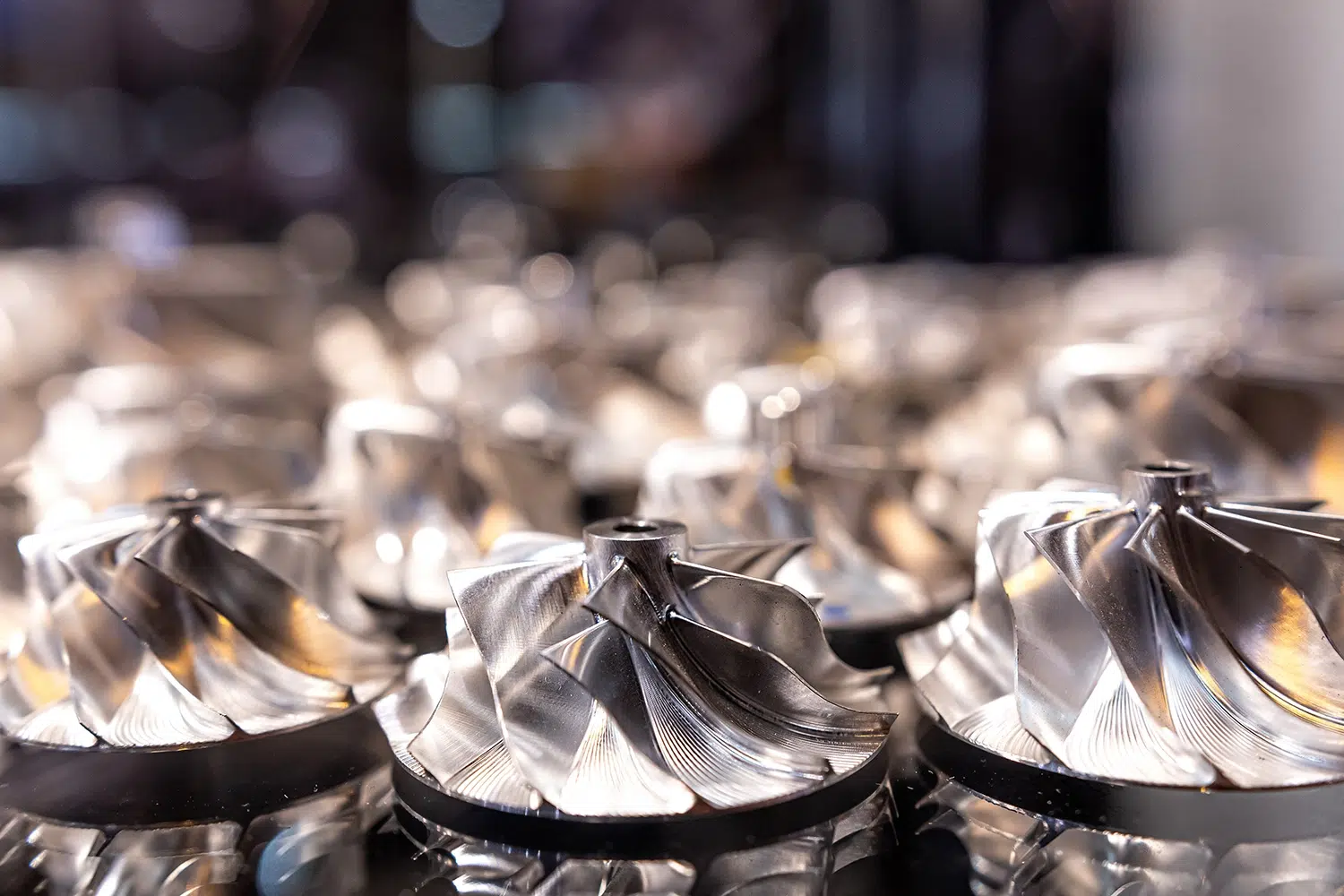
Tinning is a surface treatment process that involves applying a thin layer of tin to various types of materials in order to improve their surface properties. This technique is widely used in many industrial sectors, including plumbing, electronics, and the food industry, where corrosion resistance, conductivity, and material safety are essential criteria.
In practice, tin plating can be achieved by immersing the part in a bath of molten tin, through electroplating, or via a chemical process, resulting in a uniform and well-adhered coating. Depending on technical requirements, it can be performed using pure tin, which is known for its corrosion resistance and non-toxicity.
We offer various tin plating finishes to meet the technical and aesthetic requirements of each application. Tin can be applied with a matte finish, for a more understated and technical look, or with a glossy finish, providing a smoother and more reflective surface, often sought after for aesthetic reasons or to achieve a clean visual appearance. In addition, we also apply 60/40 tin-lead alloy coatings , which are particularly valued in industrial and electronic applications for their excellent solderability, mechanical stability, and reliable conductivity.
The various tinning techniques
At Wipelec, we use a variety of tinning techniques, carefully selected to meet your specific needs and the technical requirements of your project.
Electrolytic tin plating (galvanic)
This process involves applying a thin layer of tin to a metal surface to ensure the longevity and durability of metal parts—a critical quality in many industries, from automotive to aerospace.
- Precise control of deposit thickness
- A uniform, high-quality coating suitable for demanding technical applications
Hot-dip galvanizing
Hot-dip tinning involves coating a metal part with a thin layer of molten tin to provide effective protection against corrosion. This process also improves conductivity and facilitates welding operations.
- Surface ideally suited for welding operations, with excellent adhesion
- Excellent corrosion protection, even in damp environments
Chemical tin plating
Chemical tin plating is a process that deposits a thin layer of tin onto a metal part without the use of an electric current, through a controlled chemical reaction.
- Popular for precision parts and electronic applications
- Uniform coating, even on complex shapes or hard-to-reach areas
Why choose tin plating as a surface treatment?
Corrosion protection
Tin forms an effective barrier against moisture and air, limiting metal oxidation. This significantly extends the service life of components, even in harsh environments.
Aesthetic appeal
The tin plating gives the part a smooth, uniform appearance. In addition to its technical qualities, it provides a visually polished finish, making it ideal for visible or precision parts.
Improved weldability
Tinning provides excellent adhesion for welding operations. It results in clean, strong, and durable joints, while making the operators’ work easier.
Improved electrical conductivity
Thanks to its conductive properties, tin facilitates the flow of electric current. This is a key advantage for electronic components, where the reliability of connections is essential.
The steps in the tinning process
To ensure optimal results, tinning relies on a rigorous and structured process.
Preparation of parts
Before any process begins, the part is cleaned, degreased, and pickled to remove impurities, grease, oxides, and contaminants. This ensures proper adhesion of the tin coating.
Activation by chemical treatment or fluxing
We apply a chemical solution to prevent oxidation prior to deposition, ensuring optimal adhesion and a perfectly uniform coating.
Tin deposition
Depending on the technique chosen:
Electrolytic: deposition carried out in an electrolytic bath under the action of an electric current
Hot process: immersing the part in molten tin
Chemical: a coating obtained by immersion in a tin solution, without the use of an electric current
Draining and spinning
This removes excess tin to prevent drips and surface irregularities.
Finishing processes (passivation, drying, etc.)
Passivation can be applied to prevent premature oxidation of the surface. Drying or cooling then stabilizes the tin layer and ensures its long-term durability.
Quality Control
Tests are conducted (thickness, adhesion, appearance) to ensure that the coating meets the required standards, with criteria that may vary depending on the technique used.
Why choose Wipelec for tin plating?
For over 40 years, Wipelec has established itself as a leading player in surface treatment, particularly in tin plating. We apply all our expertise to deliver high-quality solutions, custom-designed to meet the specific needs of our customers.

Everything You Need to Know About Tin Plating
Do you have questions about tin plating? Find answers to the most frequently asked questions here!
Why choose tin plating over silver plating?
The decision to use tin plating rather than silver plating depends primarily on the technical and economic constraints of the application.
Tinning is generally preferred for its excellent cost-performance ratio. It offers very good corrosion protection and excellent weldability, while remaining more affordable than silver plating. It is also more than adequate for many industrial applications, particularly in electronics and mechanical engineering.
Silver plating, on the other hand, offers better electrical and thermal conductivity, but it is much more expensive and sometimes requires additional protection against tarnishing.
In short, tin plating is the choice when a reliable, versatile, and cost-effective solution is needed, while silver plating is reserved for applications with the most demanding performance requirements.
Is tin plating suitable for electronic components?
This process is particularly well-suited for electronic components, as it improves the electrical conductivity of metal surfaces and facilitates soldering operations on circuits and components. The tin coating also ensures reliable and durable connections.
Electrolytic tin plating is often the preferred method in this field because it allows for precise control of the coating thickness. This is essential for sensitive components, as it reduces the risk of poor electrical connections and protects parts from oxidation.
What is the recommended thickness for tin plating?
The thickness of the tin plating depends on the process used and the application.
Generally, it ranges from a few microns to several tens of microns.
- Electrolytic tin plating allows for very precise control of this thickness.
- Hot tinning often results in a thicker and less even coating .
A thin layer is sufficient for electronic applications, while thicker layers are used for mechanical protection.
The goal is to strike the right balance between protection and functionality. If the coating is too thick, it can compromise certain performance characteristics. Quality control is always performed after the surface treatment.
Is tin plating environmentally friendly?
Tinning can be considered relatively environmentally sound. Tin is a recyclable material that is widely used.
Our modern processes reduce losses and waste. In fact, the baths are monitored to minimize their environmental impact.
However, certain chemical processes require strict management. Effluent treatment is critical in industrial facilities. Environmental regulations strictly govern these practices. Our goal is to minimize pollutant discharges.
What is the service life of an industrial tin plating process?
The lifespan of a tin coating depends on the conditions under which it is used. Under normal conditions, it can last for many years.
The quality of the process has a significant impact on its performance, just as proper preparation improves its durability.
In harsh environments, passivation may be necessary. The thickness of the coating also plays an important role.
In short, it is a stable but not permanent surface treatment .
Related surface treatments
Would you like to learn more about our other surface treatments? Find out more and explore all our solutions!