
Industrial gilding
What is industrial gold plating?
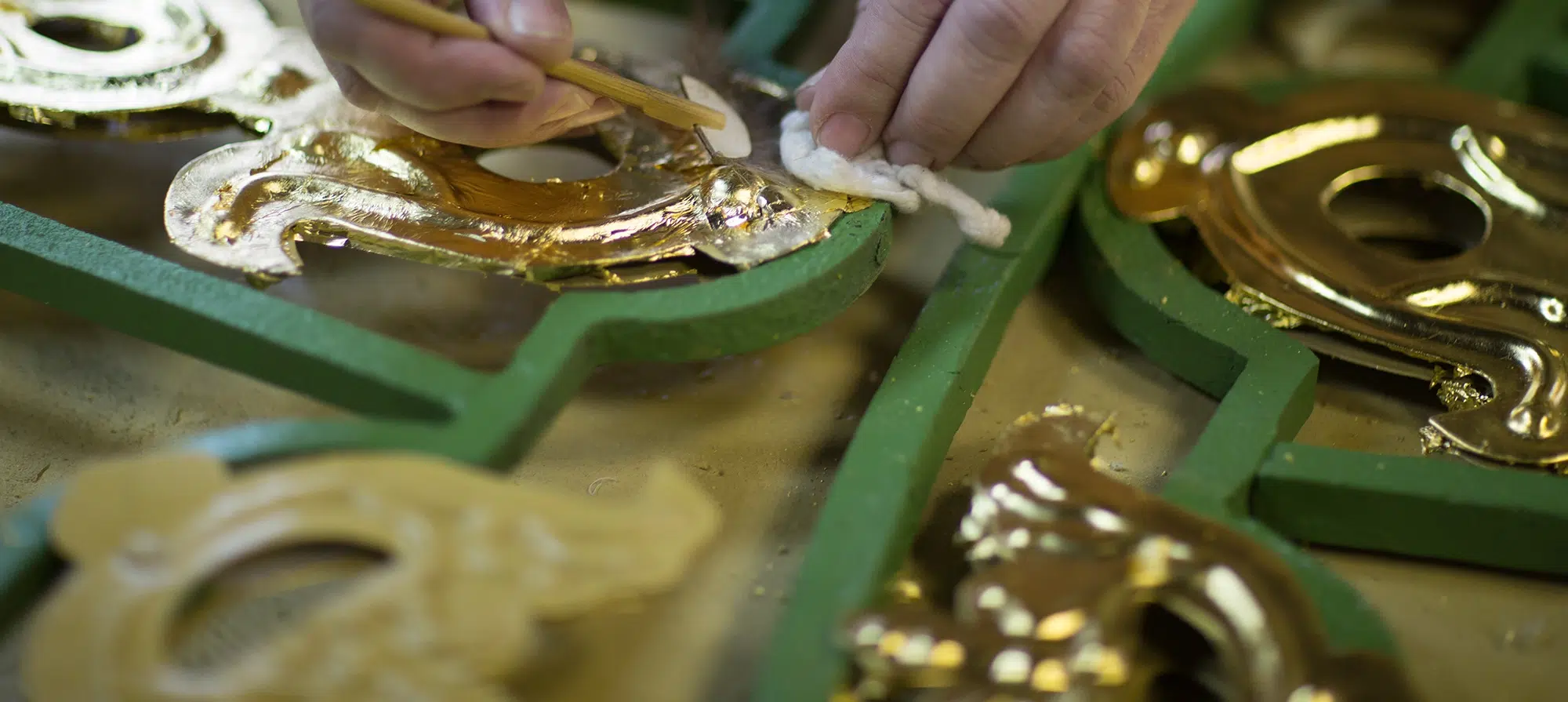
Gold plating, also known as industrial gold plating or gold coating, involves depositing a layer of pure gold onto the surface of a part, typically through an electrolytic process. This process is not intended for decorative purposes, unlike traditional gold leafing, but serves specific industrial objectives: improving the conductivity of a contact, protecting a part from corrosion, or ensuring long-term stability.
Gold plating is typically applied to base metals such as brass, copper, nickel, or steel after several preparatory steps. The deposited layer is typically between a few tenths of a micron and several microns thick, depending on the nature of the application and the conditions to which the part will be exposed.
The different types of electrolytic gold plating
Depending on your needs, several types of gold plating can be applied.
Pure gold (fine gold)
This treatment is used when maximum conductivity and corrosion resistance are the top priorities. Although it is highly flexible, it has lower hardness and is best suited for electronic applications with low mechanical wear.
Hard gold
Hard gold is produced by alloying gold with a small amount of cobalt, nickel, or iron. This coating offers significantly higher wear resistance and is therefore the preferred choice for electrical contacts subjected to repeated friction, such as removable connectors.
The Golden Flash
Gold plating refers to an extremely thin coating, typically less than one micron thick, used as a decorative finish or as a bonding layer prior to further treatment. It ensures an excellent aesthetic appearance and provides targeted protection.
Why choose a gold surface finish?
Gold plating is one of the most effective surface treatments available today. Its benefits add up and justify its higher cost compared to other metal coatings.
Corrosion resistance
Gold is virtually unaffected by most harsh elements, such as moisture, salt air, or industrial fumes. A gold coin retains its properties and remains reliable over time, even when used in demanding environments.
Excellent weldability
Gold-plated surfaces are particularly well-suited for brazing and soldering, making them the standard finish for components used in electronic assemblies.
High thermal stability
Gold can withstand extreme temperature fluctuations without losing its properties, making it a particularly reliable material for the aerospace and industrial sectors, which are subject to significant temperature variations.
Very high electrical conductivity
Unlike copper or silver, it does not oxidize, ensuring stable contact resistance over time. This is why gold is used on the contacts of sensitive electronic connectors, circuit boards, and space-grade components.
The Electrolytic Gold Plating Process, Step by Step
Electrolytic gold plating is the most common method for achieving a uniform, controlled, industrial-grade deposit. The process involves passing an electric current through a bath containing gold salts, which causes gold ions to deposit onto the workpiece.
Surface preparation
Before any coating is applied, the part undergoes a thorough degreasing process, followed by a stripping process that removes oxides and other residues that could compromise adhesion. This step determines the final quality of the coating.
Applying a primer
In most cases, gold is not deposited directly onto the base metal. A nickel undercoat is applied to serve as a diffusion barrier, sometimes preceded by a thin layer of copper to improve adhesion. This multilayer structure is essential for the durability of the deposit.
Electrolytic gold deposition
The part, immersed in the electrolyte bath, acts as the cathode. Under the influence of the current, gold ions are deposited gradually and evenly. The current density, bath temperature, and processing time are precisely adjusted to achieve the target thickness.
Rinsing and drying
After electroplating, the part is rinsed with demineralized water to remove all traces of the plating solution, then dried. A final inspection verifies that the thickness, appearance, and adhesion meet specifications.
Industrial applications of gold plating
Gold plating is used in industries where reliability is non-negotiable.
- Leather goods: Used for plating metal parts such as buckles, clasps, or studs.
- Medical: This surface treatment is used for implantable devices and diagnostic instruments due to its biocompatibility and chemical stability.
- Jewelry: It is particularly well-suited for use in jewelry to enhance the appearance of pieces, increase their resistance to wear and tear, and preserve their luster over time.
- Defense and Telecommunications: This treatment is used to protect components and ensure their long-term reliability, even in demanding and harsh environments.
- Aerospace: Exposed to extreme conditions (temperature fluctuations, radiation), equipment requires reliable materials. Gold is therefore used in certain onboard components, sensors, and transmission systems to ensure their performance and durability.
Learn more about gold plating
Do you have questions about gold plating? Find answers to the most frequently asked questions here!
On which metals can gold plating be applied?
Gold plating can be applied to most conductive metals: brass, copper, bronze, steel, nickel, and stainless steel.
In the vast majority of cases, gold plating is not applied directly to the base metal. Instead , a nickel undercoat is added to act as a diffusion barrier, sometimes preceded by a layer of copper to optimize adhesion.
This process ensures the coating's durability and electrical stability over time.
What thickness of gold plating should be used?
The thickness depends directly on the intended use of the part:
- Whether used purely for aesthetic purposes or as a primer, the thickness remains under one micron (0.1 to 0.5 µm).
- For a standard electronic contact, the target thickness is generally between 0.5 and 2 µm.
- In demanding industries such as aerospace and defense, where parts are often subjected to high stress or exposed to harsh conditions, a coating thickness of 3 to 5 µm or more may be required.
Our teams will help you determine the thickness that best meets your specifications.
What is the difference between pure gold and hard gold?
Pure gold (fine gold) offers maximum conductivity and the best corrosion resistance, but remains relatively soft. It is suitable for stationary contacts that are not subject to significant mechanical stress.
Hard gold, combined with a small amount of cobalt, nickel, or iron, is significantly harder and much more resistant to wear caused by friction. It is the preferred choice for removable connectors or any contact subject to repeated insertion.
Is gold plating suitable for small production runs or one-off parts?
Our process is capable of handling everything from single parts and prototypes to medium- and large-scale production runs.
Each project is carefully evaluated to tailor the process, coating thickness, and coating specifications to your specific needs, with no minimum volume requirements.
What are the turnaround times, and how can I get a quote?
Lead times vary depending on the quantity, the complexity of the parts, and any upstream or downstream processes that may be required (such as precision machining, chemical etching, or other surface treatments).
To provide you with a customized quote, simply let us know your requirements: type of parts, material used, desired gold thickness, and intended use.
Our team will get back to you promptly with a technical solution and a customized quote.
Please feel free to contact us for more information!
Wipelec, your partner for gold surface treatment
We provide personalized support for every project:selecting the type of gold (pure or hard), determining the optimal thickness, choosing the base layers, and ensuring that the deposits meet current standards. Whether your pieces are one-offs, small batches, or part of a recurring production run, we guarantee consistent quality and full traceability.
Do you have a project that requires gold surface treatment? Contact our team to discuss your needs and receive a customized quote. With over 40 years of experience, we’ll put our expertise to work to ensure the reliability and performance of your parts.

Related surface treatments
Would you like to learn more about our other surface treatments? Find out more and explore all our solutions!