
Electrolytic nickel plating
What is electroplating?
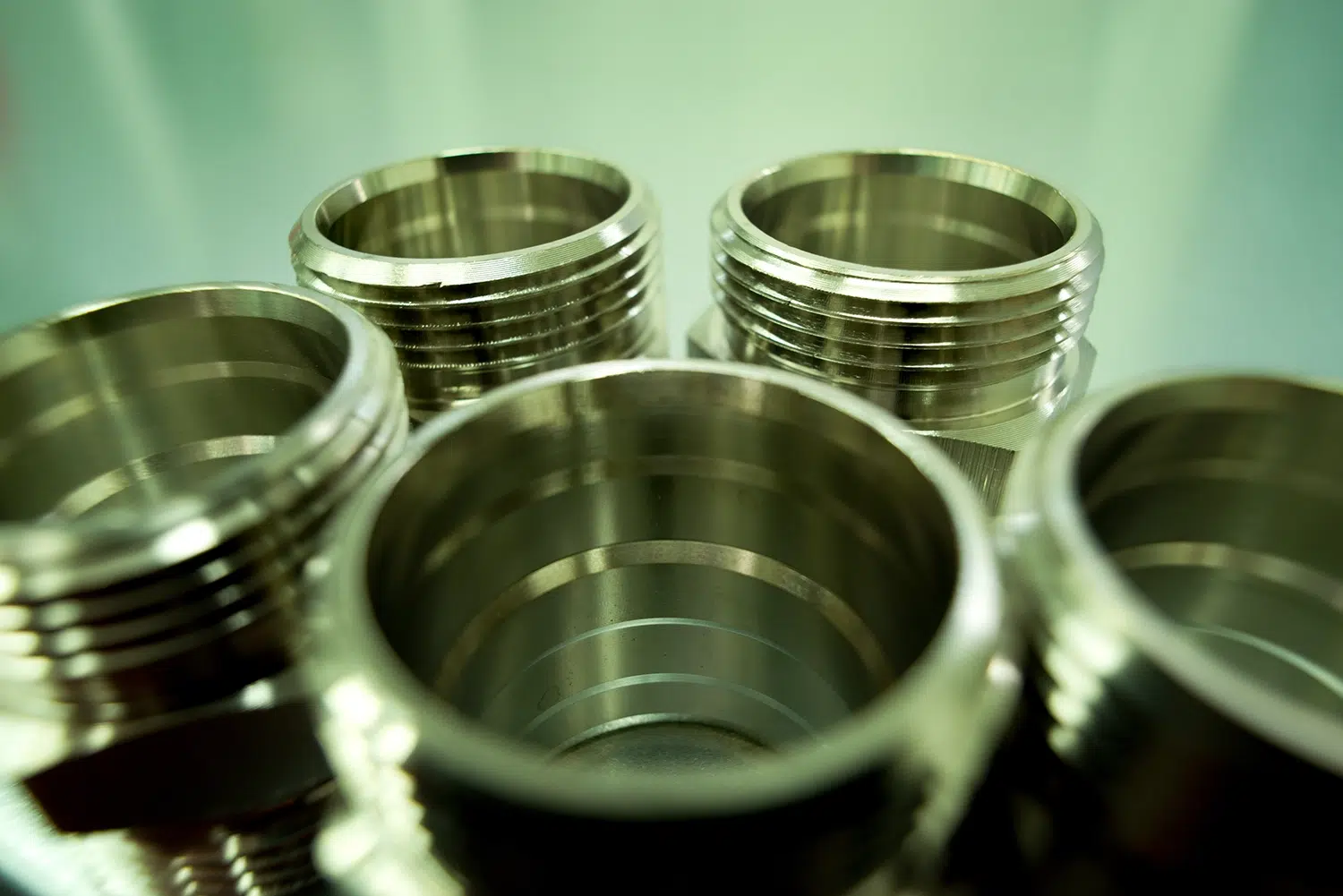
Electrolytic nickel plating is a surface treatment process used to deposit a layer of nickel onto metal parts (steel, aluminum, etc.). The parts are immersed in an electrolytic bath consisting of aqueous solutions rich in nickel salts. Applying an electric current then triggers the electrolysis process, allowing for the deposition of a uniform, adherent, and precisely controlled layer of nickel.
In demanding industries such as the connector industry, electrolytic nickel is frequently used as a base layer prior to the application of gold, tin, or silver plating. It acts as an effective barrier between the materials, improving the adhesion and reliability of the final coatings.
There are various types of electrolytic nickel plating baths, each designed to meet specific requirements. Formulated from nickel salts (chlorides, sulfates, sulfamates, or mixtures), these baths produce deposits with a wide range of properties. Depending on their composition and application, they can be matte or glossy, used as a finish or as a base coat to ensure perfect compatibility between different metals.
- Electrical conductivity: excellent
- Finish options: semi-gloss ductile (sulfamate type), technical gloss, and cosmetic gloss
- Hardness: approximately 500 HV
- Thickness: 1 to 20 µm
- Corrosion resistance: resistant to chemical attack
- High-temperature resistance
All subjects
Electrolytic nickel plating can be applied to a wide range of materials to improve their corrosion resistance, conductivity, and aesthetic appearance. Browse this list to discover the main materials compatible with this surface treatment process.



The advantages of this process
Corrosion protection
Electrolytic nickel plating forms an effective barrier between the metal and its environment. It limits oxidation and provides long-lasting protection for parts against moisture, chemicals, and external aggressions, thereby extending their service life.
Excellent grip
When used as a base coat, nickel improves the adhesion of subsequent deposits such as gold, silver, or tin. It plays a key role in the reliability and durability of multilayer coatings.
Wear-resistant
Thanks to its uniform, high-adhesion structure, the nickel coating reduces friction and abrasion. This helps maintain the parts’ performance over time, even under heavy use.
Aesthetic appeal
Electrolytic nickel plating provides a high-quality finish. Depending on the process used, it can produce a glossy, satin, or matte finish, adding significant aesthetic value to the treated parts.
Uniformity of deposition
The electrolytic process produces a uniform coating, even on complex parts. This uniformity ensures consistent protection across the entire surface.
Improved hardness
This treatment increases the mechanical strength of surfaces. Nickel-plated parts are less susceptible to scratches, impacts, and wear, making them particularly well-suited for demanding environments.
The steps in the electrolytic nickel plating process
To ensure optimal results, electrolytic nickel plating relies on a rigorous and structured process.
Preparation of parts
Before any plating process begins, the parts are carefully prepared to ensure the quality of the plating. This step includes degreasing to remove oils and impurities, as well as chemical or mechanical treatments to remove oxides and activate the surface. Thorough preparation is essential to ensure proper adhesion of the nickel.
Intermediate surface rinsing
After each preparation step, the parts are rinsed with water to remove any chemical residues. These rinses prevent contamination of subsequent baths and help maintain the overall quality of the process.
Immersion in an electrolytic bath
The parts are then immersed in a bath containing dissolved nickel salts. This bath provides the environment in which the metal deposit will form. Its composition is precisely controlled to ensure the final properties of the coating.
Application of Electric Current
An electric current is applied between the parts (cathode) and a nickel anode. Under the influence of this current, the nickel ions in the solution move and deposit evenly on the surface of the parts.
Formation of nickel deposits
As the current flows, a layer of nickel gradually forms . The thickness and properties of the deposit are controlled by adjusting process parameters, such as current intensity or processing time.
Final rinse
Once the plating process is complete, the parts are rinsed again to remove any traces of the electroplating solution. This step helps preserve the appearance and performance of the coating.
Drying and Finishing
The parts are then dried and may undergo additional processes as needed, such as polishing or quality control. This final step ensures that the finished product meets both technical and aesthetic requirements.
Why choose Wipelec for electrolytic nickel plating?
- A comprehensive and high-performance fleet of machinery
- Over 20 years of experience in electrolytic nickel plating
- High adaptability and responsiveness
- A single point of contact throughout your project

Learn more about electrolytic nickel plating
Do you have questions about electroplating? Find answers to the most frequently asked questions here!
What is the difference between chemical nickel plating and electrolytic nickel plating?
Electrolytic nickel plating relies on an electric current, whereas chemical nickel plating works without electricity, using a chemical reaction.
Electrolytic nickel plating is often faster, more cost-effective, and valued for its aesthetic appeal, but it may be less uniform on complex parts.
Electroless nickel plating provides a uniform coating, even on complex shapes, as well as improved corrosion resistance, without requiring an electrical connection.
The choice between the two depends on technical constraints, the desired result, and the budget.
What factors influence the quality of the deposit during electroless nickel plating?
To achieve a high-quality electrolytic nickel deposit, several parameters must be strictly controlled:
- Current density: The intensity of the applied current plays a key role in deposit formation. Too high a current density can cause defects such as rough surfaces, burn marks, or bubbling, while a properly adjusted current ensures a uniform and well-adhered deposit.
- Bath temperature: Temperature directly affects the deposition rate and the properties of the coating. A bath maintained at a temperature generally between 40°C and 60°C provides a good balance between yield and finish quality.
- Solution pH: The pH must be carefully controlled to ensure the stability of the bath and prevent the formation of defects. An improperly adjusted pH can cause nickel to precipitate or impair the adhesion of the deposit. For nickel sulfate-based baths, it is generally maintained between 3 and 5.
- Nickel ion concentration: A stable nickel ion concentration is essential to ensure a uniform deposit. Fluctuations can lead to thickness irregularities or surface defects, which is why regular monitoring of the bath is important.
What post-nickel plating treatments are available to improve the quality of the deposit?
After electrolytic nickel plating, several additional treatments can be performed to optimize the performance and appearance of the deposit:
- Passivation: This is a chemical treatment that creates a thin protective layer on the nickel. This additional barrier enhances corrosion resistance and improves the durability of parts in harsh environments.
- Polishing: Polishing significantly improves the appearance of nickel-plated parts. It produces a smoother surface, reduces micro-defects, and provides a glossy or mirror finish depending on the desired level of treatment.
- Rinsing and drying: Thorough rinsing removes any chemical residue, preventing damage to the coating. Drying, meanwhile, ensures a clean, even finish, free of streaks or unwanted deposits.
Which materials can be nickel-plated?
Electrolytic nickel plating is primarily used on electrically conductive materials. The most commonly treated metals are steel, copper, and brass. These materials must be properly prepared to ensure good adhesion of the deposit. Surfaces must be clean, degreased, and free of any oxidation prior to treatment. Certain alloys can also be nickel-plated, provided they are compatible with the process. Nickel plating cannot be applied directly to non-conductive materials without prior treatment.
In some cases, a conductive primer is required to enable the coating process. The quality of the result depends heavily on the initial surface condition. The more thorough the preparation, the more uniform and durable the coating will be . This process is therefore reserved for parts that can withstand the electrochemical stresses involved.
Is this process suitable for complex parts?
Electrolytic nickel plating can be applied to complex parts, but with certain limitations. The deposit follows the path of the electric current, which can result in variations in thickness. Raised areas generally receive more deposit than recessed areas. This can make the coating less uniform on highly complex shapes.
In such cases, electroless nickel plating may be a better alternative. However, with proper parameter adjustment, the results remain satisfactory. The design of the parts also affects the quality of the deposit. Proper preparation and proper placement in the bath are essential. The process remains widely used despite these limitations. It is suitable for many standard industrial applications.
Related surface treatments
Would you like to learn more about our other surface treatments? Find out more and explore all our solutions!