
Alodine 1200
What is the Alodine 1200 treatment?
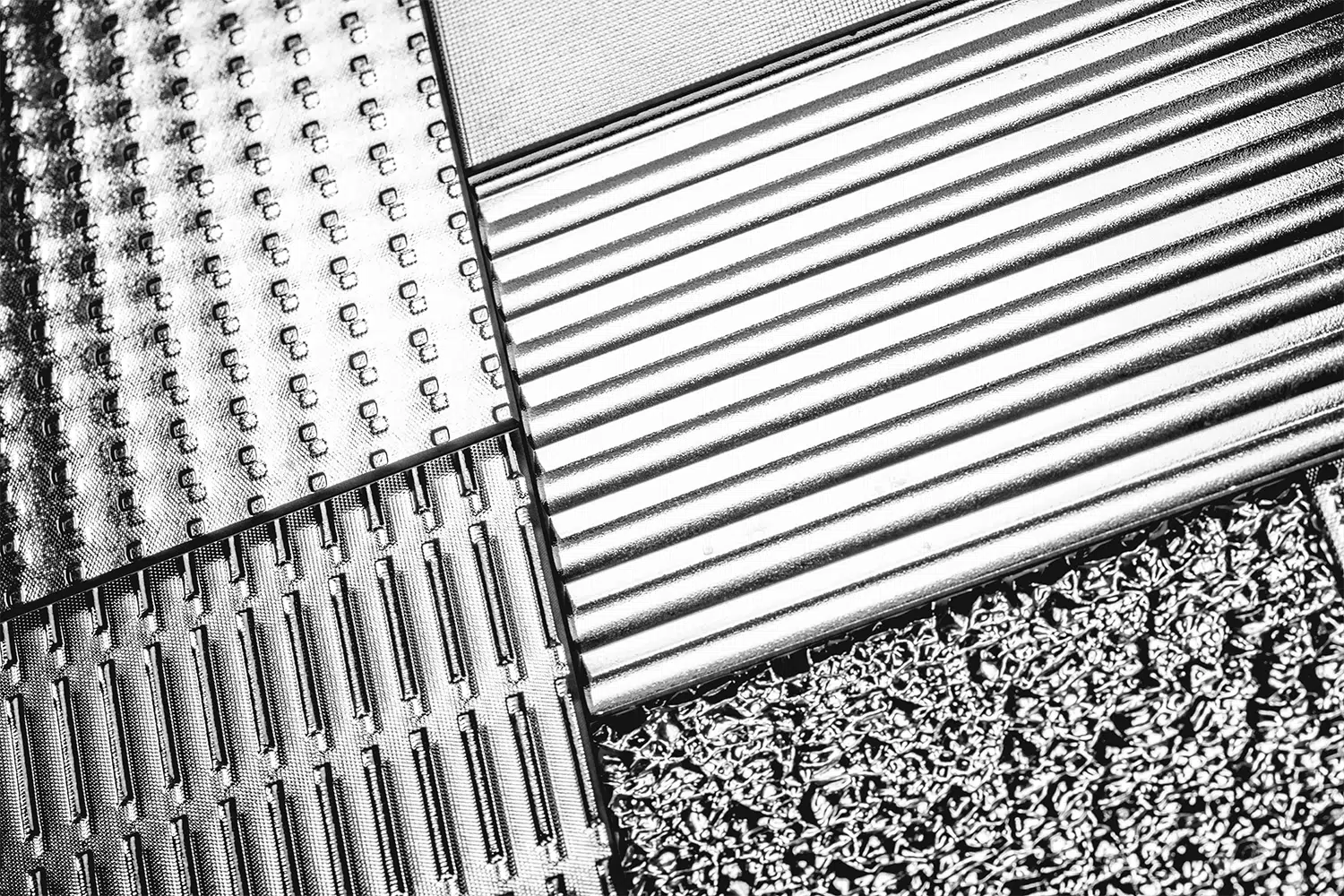
The Alodine 1200 treatment is a chemical conversion process applied to aluminum and its alloys to improve their surface properties without altering their dimensions or mechanical characteristics. It involves forming a very thin protective layer directly on the metal’s surface. This layer acts as a barrier against oxidation and corrosion while preserving the material’s electrical conductivity, which distinguishes it from anodizing in particular.
The process is based on a chemical reaction that forms an extremely thin conversion layer.
One of the main advantages of Alodine 1200 is its dual function: corrosion protection and maintenance of electrical conductivity. Unlike anodizing, it does not create an insulating layer, which allows it to be used oncomponents that require grounding or electrical continuity, such as electronic enclosures or assembled structures.
- Aerospace: Protecting aluminum components in aircraft structures from corrosion while ensuring the parts remain lightweight and reliable.
- Automotive: Improving the durability of aluminum parts exposed to harsh conditions (humidity, salt, temperature fluctuations), particularly in high-performance vehicles.
- Electronics: Optimizing the conductivity, corrosion protection, and durability of aluminum enclosures, connectors, and heat sinks.
- Marine: Improving the corrosion resistance of aluminum components used in marine environments, particularly against humidity, sea spray, and salt water.
The benefits of this aluminum coating
Optimal electrical conductivity
This process preserves the surface’s electrical conductivity. This property is essential for applications requiring electrical continuity, such as electronic equipment or aerospace structures. The part remains conductive, allowing it to be easily grounded to dissipate electricity, which eliminates the need to locally remove the coating to create conductive areas. This results in both time savings and increased reliability in industrial design.
A quick and simple chemical process
The process for applying Alodine 1200 is relatively simple and quick to implement. It can be applied by immersion, spraying, or even spot-applied for touch-ups, without requiring electricity. This flexibility makes it easy to integrate into a production line and helps reduce production costs.
Improving the adhesion of coatings
This treatment is highly regarded as a primer before applying paint or varnish. It prepares the surface evenly, promoting excellent adhesion of the coatings. This reduces the risk of peeling, cracking, or chipping over time. It therefore ensures that finishes hold up better, even under harsh conditions.
Corrosion protection
Alodine 1200 provides excellent corrosion protection byforming a chemical conversion coating directly on the aluminum. This barrier limits oxidation and effectively protects parts exposed to moisture or harsh environments. It is particularly used in demanding sectors such as aerospace and marine. This significantly increases the durability of treated components.
The Alodine treatment application process
Alodine coating can be applied byimmersion, spraying, or brushing. The process involves a series of precise steps designed to ensure that the surface is perfectly clean and reactive prior to treatment.
The process begins with a thorough cleaning of the aluminum to remove all traces of grease, oil, or impurities. If greasy residues are present, solvents such as acetone, MEK, or MIBK are used with a clean cloth. In the absence of specific contamination, demineralized water is sufficient for cleaning. For shot-blasted surfaces, an abrasive pad such as Scotch-Brite soaked in demineralized water is used in accordance with current standards, with several successive passes followed by rinsing with deionized water. The surface must then be perfectly clean and shiny and left to dry for at least 15 minutes.
When applying the Alodine solution, care must be taken to protect sensitive areas such as composites or wiring. The product is then applied, keeping the surface wet for 2 to 3 minutes for the 600 and 1200 series, and 3 to 5 minutes for the 1000 series. A yellow to golden-brown color gradually appears, indicating the formation of the protective layer. Excess product is then wiped off. If any unevenness occurs, light sanding followed by rinsing will correct the area before a new application.
Once the reaction is complete, the surface is rinsed with clean water to remove any chemical residue, then dried at a controlled temperature. This drying process cantake between 20 and 35 minutes to improve corrosion resistance. Since the coating is sensitive at this stage, it must be handled with care.
Why choose Wipelec for Alodine treatment?
Wipelec supports you in carrying out your projects that require Alodine 1200 treatment, ensuring a controlled process tailored to industrial requirements.

Learn more about the Alodine 1200
Do you have questions about Alodine treatment? Find answers to the most frequently asked questions here!
What are the differences between alodine and anodizing?
Alodine 1200 and anodizing are two surface treatments for aluminum, but they work in very different ways .
Alodine is a very fine chemical conversion treatment that creates a microscopic protective layer without significantly altering the metal's surface.
In contrast, anodizing relies on an electrochemical process that thickens aluminum’s natural oxide layer, forming a much more robust protective coating. Anodizing therefore offers greater mechanical strength and durability in harsh environments. However, it can electrically insulate the part, unlike Alodine, which maintains conductivity. Alodine is also faster and less expensive to apply. It is often used as a pretreatment before painting or bonding, whereas anodizing can also serve a decorative purpose.
The choice between the two therefore depends on the technical constraints of the project.
| Factors | Alodine | Anodizing |
|---|---|---|
| Color options | Yellow, yellowish-brown, or natural color | Wide selection of colors |
| Thickness | 0.5–4 μm | 5–25 μm |
| Electrical conductivity | Driver | Non-conductive |
Can Alodine 1200 be applied to all aluminum alloys?
The Alodine 1200 is compatible with most aluminum alloys, but its effectiveness may vary depending on the metal's composition.
Some alloys with very high copper or silicon content may react differently and produce a less uniform result.
In industry, preliminary tests are often conducted to verify compatibility. Standard aerospace alloys are generally well suited for this treatment. It is therefore important to check the technical specifications before application. In most industrial applications, it remains a reliable and widely applicable solution.
What is the difference between Alodine 1200 and Alodine 1000?
The main difference between Alodine 1200 and Alodine 1000 lies in the presence and concentration of the chemical compounds and in the performance of the resulting film.
Alodine 1200 generally offers superior corrosion resistance and adhesion. It is often used in more demandingapplications, such as the aerospace industry.In addition, it produces a light gold to brownish-yellow finish.
Alodine 1000 can be used for less critical applications or in less aggressive environments.It preserves the natural metallic color of the aluminum surface .
Both products are based on the same chemical conversion principle, but their formulations and performance differ. The choice therefore depends on the stringency of the specifications.
Is Alodine 1200 a permanent treatment?
Alodine 1200 is not a completely permanent coating, but rather a long-lasting chemical protection. Its performance depends heavily on the environment in which the part is used.
In dry or controlled environments, it can last a long time without significant degradation . However, in harsh environments (humidity, salt, marine atmosphere), it may require additional protection, such as a coat of paint. This is why it is often used as a base coat in a multi-layer protective system.
On its own, it provides moderate protection, but when combined with other finishes, it becomes highly effective. It therefore plays a key role in the overall durability of aluminum parts.
Related surface treatments
Would you like to learn more about our other surface treatments? Find out more and explore all our solutions!