
Metalizing plastics
What is plastic metallization?
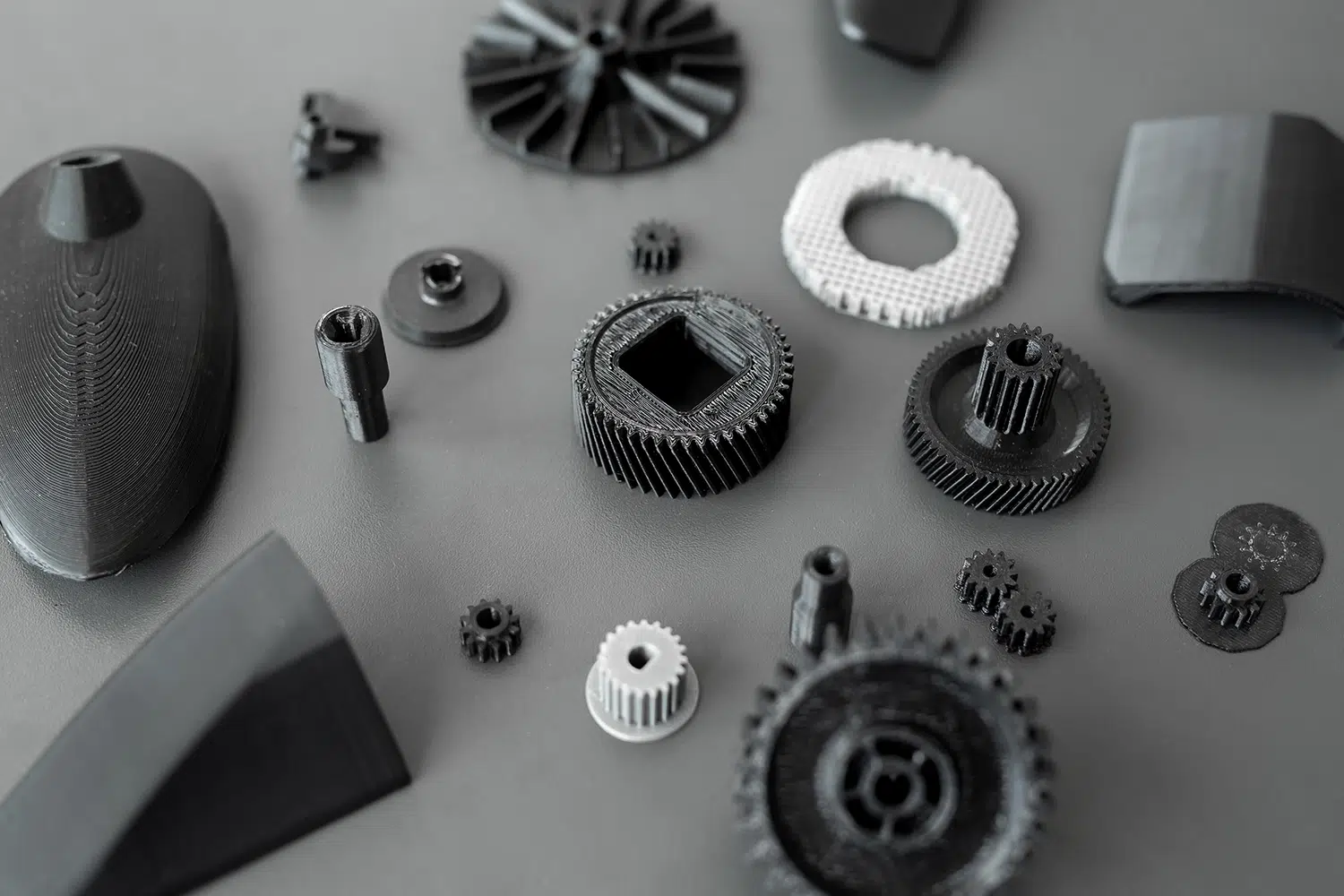
Electrolytic metal plating of plastics is a surface treatment process that involves depositing a metal layer onto plastic parts. It transforms a non-conductive material into a substrate capable of receiving metal deposits, while preserving the polymer’s light weight and design flexibility.
It is typically applied to engineering plastics such as ABS or polycarbonate after the surface has undergone a specific chemical treatment. It is used in many industrial sectors, including electronics, connectors, automotive, and aerospace, where it meets technical, mechanical, and aesthetic requirements.
- ABS
- Polycarbonate (Lexan)
- Polycarbonate (L-polyurethane)
- Polyester
- Ultem
- Ryton
- Polymethacrylate
The advantages of this process
Electromagnetic Interference (EMI) Shielding
Metallization protects electronic components from electromagnetic interference. It acts as a barrier that limits signal disruption. This improves the reliability and stability of devices. It is essential in the electronics, automotive, and aerospace industries.
Aesthetic appeal
Metal plating gives plastic parts a highly realistic metallic finish (chrome, glossy, satin). It creates a premium visual effect without using solid metal. This enhances the perceived value of the parts, particularly in product design, the automotive industry, and the cosmetics sector. It also offers a wide range of finishing options and customization possibilities.
Electrical conductivity
The metallic layer makes the plastic surface conductive, unlike the raw material. This allows for the dissipation of electrostatic charges and the integration of certain electronic functions. It is very useful in technical components and connectors. It also makes it easier to use in environments sensitive to static electricity.
Improved surface resistance
The metal coating reinforces the surface against wear, micro-scratches, and certain chemicals. It increases the durability of parts that are subject to frequent handling. Even though the core remains plastic, the surface becomes more robust. This extends the product’s lifespan and enhances its perceived quality.
The metallization process
The process of metallizing plastics involves several successive steps, each of which is essential for ensuring that the metal adheres permanently to a non-conductive material.
It all begins with a chemical treatment of the plastic’s surface, which slightly alters its structure by creating micro-roughness. This step is essential because it prepares the substrate and promotes adhesion for subsequent treatments.
The part is then subjected to an activation phase, during which catalytic particles—typically based on palladium (or platinum)—adhere to the prepared surface. This activation enables the chemical reaction that takes place in the next step.
Next comes the chemical copper plating process, during which palladium acts as a catalyst by initiating the reduction of copper. This results in the formation of a thin, uniform, and conductive layer of copper, which is essential for the rest of the process.
Once this initial metal layer has been applied, the part becomes conductive and can then be further treated through electroplating, allowing other metals (such as nickel or chromium) to be applied depending on the technical, mechanical, or aesthetic requirements of the project.
Why choose Wipelec for plastic metallization?
- A comprehensive and high-performance fleet of machinery
- Over 20 years of experience in surface treatment
- High adaptability and responsiveness
- A single point of contact throughout your project

Learn more about metalizing plastics
Do you have questions about metalizing plastics? Find answers to the most frequently asked questions here!
Which plastics are best suited for metallization?
The most suitable plastics are those that exhibit good resistance to controlled chemical attack.
ABS is the standard material for industrial plating. Polycarbonate is also used for its excellent mechanical properties. Certain engineering polyurethanes and polyesters are compatible, depending on their formulation. Materials such as Ultem or Ryton are used for specific technical applications. Polymethacrylate can be processed under controlled conditions.
Compatibility depends on the polymer’s chemical stability when exposed to etching solutions. Plastics that are too inert or contain fillers may require specific pretreatments.
In which industrial sectors is plastic metallization used?
Metal plating of plastics is used in the automotive industry for decorative and functional parts. It is also used inelectronics for electromagnetic shielding. The home appliancesector uses it for aesthetic and technical components.The aerospace industry uses this process for certain lightweight technical parts. The medical fieldmay use it for specific components. The luxury goods industry uses this process for complex metallic finishes. It is also used in specialized industrial equipment. Each sector adapts the process to its specific requirements.
Why choose plastic metallization over tin plating, silver plating, or nickel plating?
Plastic metallization is used when we want to deposit metal onto a part that is originally made of plastic. This is the key difference between it and tin plating, silver plating, or nickel plating, which are applied only to parts that are already metallic or conductive . This process therefore allows a plastic part to be transformed into a part with a metallic appearance and properties.
The main advantage is design flexibility. We can manufacture complex shapes out of plastic (which is lightweight and inexpensive) and then give them a metallic finish. Processes such as tin plating or nickel plating do not allow for this, as they cannot be applied directly to plastic.
Silver plating is mainly used for electrical conductivity or in very specific applications, but it is expensive and less wear-resistant. Nickel plating and tin plating, on the other hand, are durable but are limited to metal parts.
In short, metalizing plastics is used when the goal is to produce a lightweight, cost-effective plastic part that has a metal-like appearance or properties.
Why choose plastic metallization?
In the industry, this process is often chosen for its combination of design, performance, and cost-effectiveness. Customers can start with a plastic part—which is lightweight, economical, and easy to mass-produce—and then give it a metallic appearance or technical properties equivalent to those of metal.
For example, this makes it possible to produce parts with a high-end finish (chrome, polished nickel) while still using plastic injection molding, which is much less expensive than machining or metal casting. It is also a real advantage for complex parts, as plastic allows for very free-form designs that would be difficult or costly to produce in metal.
In some cases, it’s not just about aesthetics. Metallization can also provide technical benefits such as electromagnetic shielding, wear resistance, or improved durability in industrial environments.
In short, this process reduces costs, makes parts lighter, simplifies production, and achieves a metallic finish or properties without having to manufacture a part entirely from metal.
Related surface treatments
Would you like to learn more about our other surface treatments? Find out more and explore all our solutions!