Nickel plating on steel
Nickel plating on steel
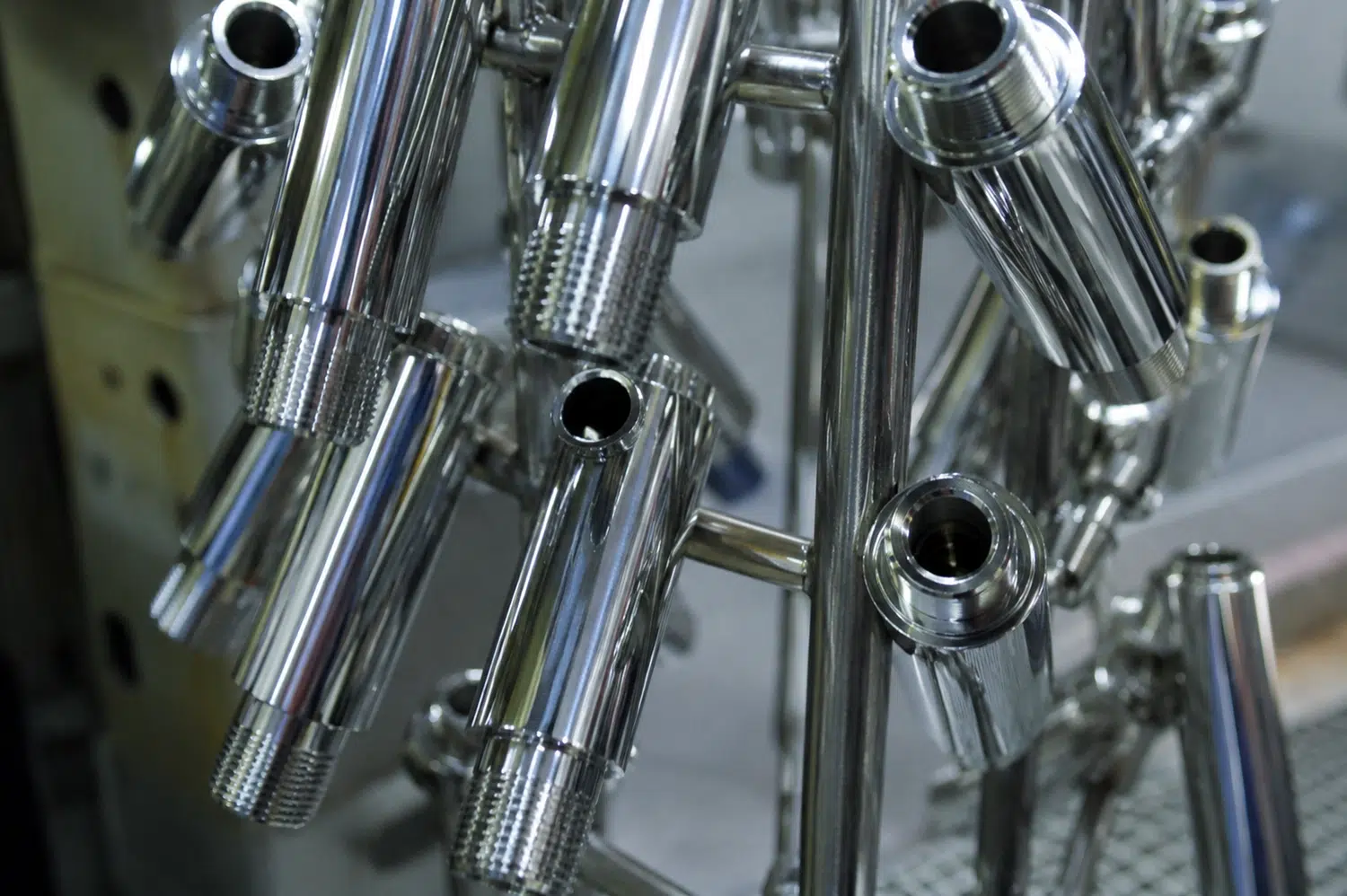
At Wipelec, we nickel-plate your steel parts—using either a chemical or electrolytic process—to protect your components from corrosion, improve their wear resistance, and ensure dimensional accuracy.
Steel nickel plating is a surface treatment process that involves depositing a layer of nickel onto a steel part to improve its mechanical, chemical, and aesthetic properties. This metal deposit forms a dense, uniform protective barrier that is particularly well-suited for demanding industrial environments.
Why nickel-plate steel?
Steel is a high-performance structural material , but it is susceptible to corrosion and surface wear. Nickel plating preserves the part’s mechanical properties while providing increased resistance to oxidation, chemicals, and friction. It is used in a variety of industries, including aerospace, automotive, chemical, defense, and precision engineering.
Specific Characteristics of Nickel Plating on Steel
Unlike other materials, steel requires thorough surface preparation prior to coating: degreasing, pickling , and activation are essential to ensure optimal adhesion. For high-strength steels, heat treatment to preventhydrogen embrittlementis recommended in accordance with current standards (ISO 4526, ISO 4527).
A nickel plating project on steel?
Please send us your plans or specifications. Our team will get back to you as soon as possible with a customized technical proposal and quote.

Key steps in the process
To achieve a neat, long-lasting finish, the process must be carried out perfectly.
Degreasing
Removal of oils and organic contaminants using an alkaline or electrolytic bath
Acid etching
Removal of surface oxides using hydrochloric acid
Surface activation
Metal preparation to optimize coating adhesion
Nickel deposit
Chemical (autocatalytic) or electrolytic application, depending on the specifications
Quality Control
Verification of thickness, adhesion, and dimensional accuracy
Chemical nickel plating or electrolytic nickel plating?
Wipelec is proficient in the two main nickel plating processes used on steel. The choice depends on the part’s geometry, dimensional tolerances, and required functional properties.
Electrolytic nickel plating on steel
An autocatalytic process that enables uniform plating across the entire surface of the workpiece, including complex areas, deep bores, and non-developable geometries. The resulting Ni-P (electroless nickel) plating offers high hardness and excellent corrosion resistance.
- Consistent thickness, even on complex geometries
- Hardness up to 1,000 HV (Vickers hardness) after heat treatment
- Excellent performance in salt spray testing (NSS test)
- No finishing work required
- Complies with ISO 4527
Electrolytic Nickel Plating on Steel
An electrolytic process (Watts bath or similar) that produces thick deposits and glossy or satin finishes. Used as a primer before chrome plating or as a final coating for decorative and functional applications. Ideal for parts with simple geometries and aesthetic requirements.
- Choose from a glossy, satin, or matte finish
- Thick deposits (up to several hundred micrometers)
- Compatible with electroforming
- Suitable for use as a duplex stainless steel underlay
- Complies with ISO 4526
Areas of application
Nickel plating on steel meets the requirements of even the most demanding industries. Wipelec provides solutions for critical components across a wide range of sectors.
Aerospace and Defense
Structural components, mechanisms, connectors, and parts subjected to extreme stress.
Precision Machinery
Gears, injection molds, cutting tools, machining components.
Electronics and Connectors
Electrical contacts, shielding enclosures, hermetic glass-to-metal feedthroughs.
Automotive
Engine parts, shafts, springs, and components subject to wear and thermal cycling.
Nuclear Power and Energy
Components in a controlled environment, with the highest traceability requirements.
Learn more about nickel plating on steel
Do you have questions about nickel plating on steel? Find the answers to the most frequently asked questions here!
Does nickel plating change the dimensions of my steel part?
A surface coating adds thickness to your steel part.
In fact, for electroless nickel plating, this thickness is precisely controlled and uniform (5 to 25 µm).
At Wipelec, we work with our customers from the design phase onward to account for machining tolerances and ensure the final dimensional accuracy of your parts.
Is nickel plating suitable for corrosive environments?
Electrolytic nickel plating, in particular, forms a uniform barrier on steel and delivers excellent performance in salt spray testing (a test used to evaluate the corrosion resistance of a sample with a surface treatment).
It is used in the chemical, marine, nuclear, and oil industries.
Performance depends on the thickness of the coating, the phosphorus content, and the quality of the surface preparation.
What standards apply to nickel plating on steel?
The primary reference standards are ISO 4526 (electrolytic nickel plating on steel) and ISO 4527 (chemical nickel-phosphorus plating).
Industry-specific standards may apply depending on your industry (aerospace, defense, nuclear).
We help you identify the regulatory requirements that align with your specifications.
Do you process stainless steel in addition to carbon steel?
We perform nickel plating on structural steel, alloy steel, carbon steel, and stainless steel.
Surface preparation varies depending on the type of steel, particularly for stainless steel, which requires a specific activation process, but the final result offers the same quality assurance.
Nickel plating on steel is a broad topic; please feel free to contact us so we can assess the feasibility of your project.
All subjects