Aluminum Nickel Plating
Aluminum Nickel Plating
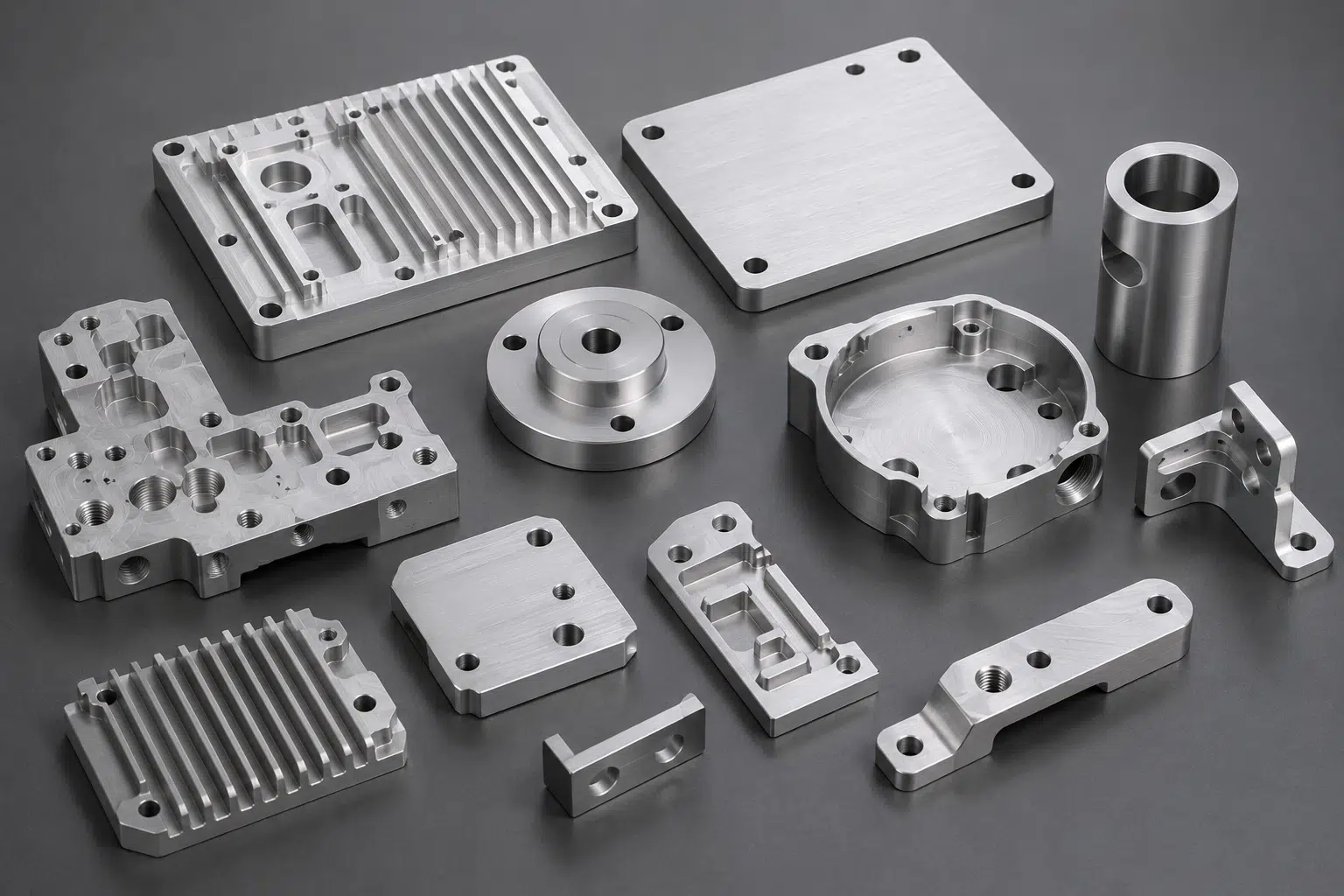
Nickel plating on aluminum requires a step that few subcontractors truly master: surface activation through zinc coating (zincate). At Wipelec, this process has been part of our expertise for over 40 years. It ensures that the nickel deposit adheres to the aluminum, and we also specialize in nickel plating on steel using surface preparations tailored to each material.
Aerospace and Defense
Structural and fastening components—lightweight design without compromising protection.
Electronics and Connectors
Nickel undercoat prior to gold or silver plating for stable contacts.
Automotive
Technical components exposed to moisture and chemical exposure.
Instrumentation
Housings and components requiring dimensional accuracy and a high-quality finish.
Why nickel-plate aluminum?
Aluminum is valued for its light weight and conductivity, but it remainssusceptible to galvanic corrosion, abrasion, and contact wear. Nickel plating adds the properties it lacks, without increasing its mass.
Corrosion resistance
The nickel coating forms a continuous barrier that protects the aluminum in humid, saline, or chemical environments.
Surface hardness
Chemical nickel plating (Ni-P) can achieve hardness levels close to those of hard chrome plating after heat treatment, without the limitations of chrome plating.
Contact & Conductivity
The nickel coating forms a continuous barrier that protects the aluminum in humid, saline, or chemical environments.
Consistent finish
Matte or glossy finish, uniform color, even on parts with complex geometries treated with electroless nickel plating.
A nickel plating project on aluminum?
Please send us your plans or specifications. Our team will get back to you as soon as possible with a customized technical proposal and quote.

Why doesn't aluminum develop a nickel-like patina like steel does?
When exposed to air, aluminum is instantly covered with a thin layer of native oxide. This layer, invisible to the naked eye, prevents any metal coating from adhering directly to it; nickel would flake off within a few hours if applied directly to it.
That is why each aluminum part undergoes a zinc-plating activation step prior to nickel plating: an intermediate zinc deposit, applied in one or two passes (double zinc plating), which replaces the oxide layer with a clean metallic surface that is immediately receptive to nickel.
This step is not visible on the finished part. Yet it alone determines how well the coating will hold up over time. In fact, this is the parameter we monitor most closely in every production run.
Our Process
To achieve a neat, long-lasting finish, the process must be carried out perfectly.
Receiving & Review
Analysis of the design, the aluminum alloy, and the part's end use.
Preparation
Degreasing, stripping, and deoxidation tailored to the alloy.
Surface activation
Double-layer zinc plating to prepare the surface for nickel plating.
Nickel deposit
Chemical or electrolytic deposition, depending on the desired thickness and geometry.
Control & Traceability
Chemical or electrolytic deposition, depending on the desired thickness and geometry.
Why Choose Wipelec?
40 years of practice
We specialize in various surface treatments: electrolytic nickel plating, silver plating, etc.
Rigorous Bath Testing
Aluminum activation is the most sensitive parameter in the process.
Full traceability
From the receipt of the shipment to final packaging, every step is documented.
A technical contact person
You'll be communicating directly with the workshop, not with a call center.
Learn more about nickel plating on aluminum
Do you have questions about aluminum nickel plating? Find the answers to the most frequently asked questions here!
Chemical or electrolytic nickel plating on aluminum?
The appropriate process depends on the part's geometry, the series, and its end use. We'll help you choose the most suitable option as soon as we begin reviewing your project.
| Criterion | Electrolytic nickel plating | Electrolytic nickel plating |
|---|---|---|
| Consistency | Consistent thickness, including in recesses and bores | Thickness varies depending on the geometry and current density |
| Ideal for | Complex parts, tight tolerances, small- and medium-volume production runs | Simple parts, high-volume production, tight budgets |
| Hardness after heat treatment | Up to values close to those of hard chrome | Good inherent hardness, less prone to change over time |
| Cost / Timeframe | A more controlled process, which generally takes longer | Faster and more cost-effective for large volumes |
What is the thickness of the nickel coating on aluminum?
The thickness generally ranges from 5 to 25 microns, depending on the application: light corrosion protection, a base coat prior to gold or silver plating, or enhanced mechanical strength in harsh environments.
In what situations is chemical nickel plating preferable to anodizing aluminum?
The choice depends on the room's function, not just the material.
Electrolytic nickel plating is generally used when the part must:
- withstand heavy wear and tear
- maintain tight dimensional tolerances
- have high hardness
- provide excellent uniformity across complex geometries
- to be brazed, welded, or have an additional coating applied
For precision parts used in the aerospace, defense, and electronics industries, nickel plating is often a more effective solution than conventional anodizing.
Does nickel plating alter the dimensions of a precision part?
Nickel plating can alter the dimensions of a part, but this effect is fully controllable.
Electrolytic nickel plating produces a uniform coating thickness, even in bores, cavities, or complex geometries.
This feature makes it possible to incorporate the machining process right from the part's design stage and to meet the most demanding functional tolerances.
Our teams can work with engineering firms starting in the design phase to anticipate material allowances.
Let's talk about your aluminum part
Send us your plan or a sample: we'll get back to you as soon as possible with technical advice on the most suitable process and an estimated timeline.
Aluminum nickel plating is a very broad topic; please feel free to contact us so we can assess the feasibility of your project.
All subjects