Aluminum
Aluminum surface treatment at Wipelec
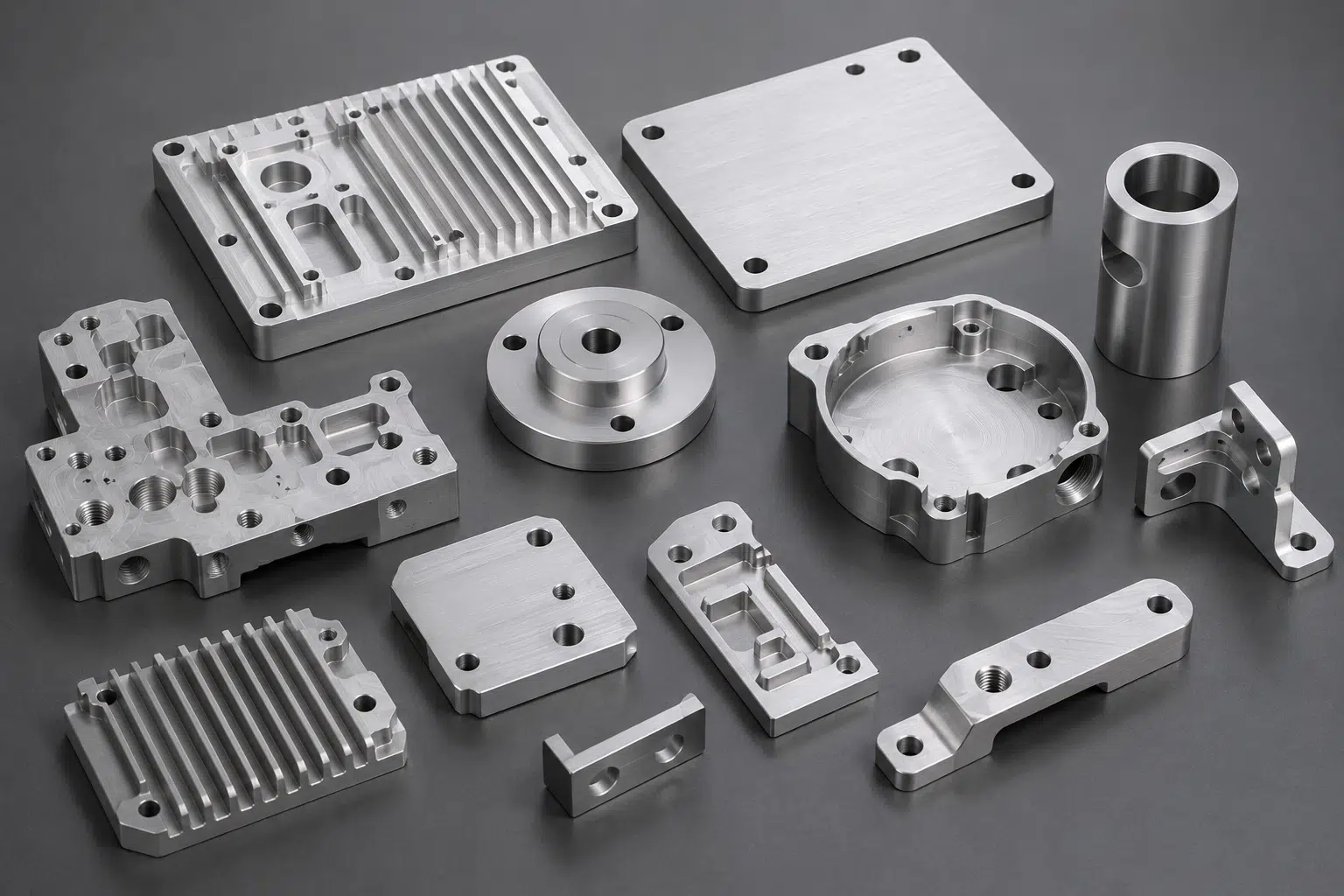
Aluminum is a lightweight material that offers an attractive appearance and good corrosion resistance. These qualities make it a go-to alloy in the aerospace, automotive, electronics, and defense industries. However, to enhance its many properties and ensure its performance over time, surface treatment is an essential process .
When exposed to air, aluminum naturally develops a thin layer of alumina. Although this oxide layer is protective, it is uneven, has poor adhesion, and can interfere with subsequent processes such as painting, bonding, or welding. In humid, salty, or chemically aggressive environments, it is no longer sufficient to provide long-term protection for the part.
Surface treatment of aluminum serves various purposes: aesthetic appeal, corrosion resistance, electrical insulation, and increased surface hardness.
The choice of process depends on the type of alloy (2000, 5000, 6000, 7000 series, etc.), the part’s geometry, and the final stresses of the application.
What surface treatments are available for aluminum?
Several processes are compatible with aluminum and its alloys. At Wipelec, we offer the following treatments, selected based on your project’s requirements.
Surtec
Surtec is an alternative to Alodine, formulated without hexavalent chromium. Compliant with RoHS and REACH directives, it offers comparable corrosion protection and an excellent primer for paint. Surtec is the preferred choice for projects subject to strict environmental and regulatory requirements, particularly in the aerospace and professional electronics industries.
Electrolytic nickel plating on aluminum
Electrolytic nickel plating can be applied to aluminum provided that a specific pretreatment (zincate) is performed. It provides high hardness, excellent wear resistance, and a perfectly uniform coating, even on complex geometries. This process is preferred for technical mechanical parts used in aerospace or optics.
Copper plating
Electrolytic or chemical copper plating on aluminum also requires a preliminary activation step. It is used as a conductive undercoat, in preparation for another plating layer (nickel, silver, gold), or to improve the electrical conductivity of electrical connectors.
Silver plating
Silver plating on aluminum is less common but can still be achieved with the proper pretreatments. It is intended for demanding applications where high electrical conductivity and resistance to oxidation are priorities: waveguides, radio frequency connectors, and satellite equipment.
Alodine 1200
Alodine 1200 is a chemical conversion coating specifically developed for aluminum. It forms a chromate-based conversion coating that effectively protects against corrosion while improving the adhesion of subsequently applied organic paints and coatings. It is the standard process in the aerospace and defense industries, particularly for parts that comply with MIL-DTL-5541 specifications (developed by the U.S. Department of Defense).
How do you choose the right finish for your aluminum part?
The choice of process depends primarily on the intended function. Other factors also come into play: alloy type, part dimensions, production volume, and required dimensional tolerances.
For precision-machined parts, certain surface treatments can cause slight dimensional changes, a factor we take into account as early as the design phase.
| Surface treatment | Technical Specifications |
|---|---|
| Alodine 1200 or Surtec | Corrosion protection and paint adhesion |
| Surtec | Compliance with the ban on hexavalent chromium (RoHS, REACH) |
| Electrolytic nickel plating | High wear resistance and hardness |
| Silver plating or copper plating | Maximum electrical conductivity |
| Chemical or electrolytic copper plating | Primer before further coating |
| Alodine 200 | Aeronautical Specifications (MIL-DTL-5541) |
Why choose Wipelec for aluminum surface treatment?
At Wipelec, we perform surface treatments on aluminum following our machining processes to achieve the results requested by our customers. Our machinery and the expertise of our teams enable us to offer all major surface treatment processes to make the aluminum more durable: Alodine, Surtec, electroless nickel plating, electroless copper plating, and tin plating.

Aluminum pretreatment
The success of a surface treatment on aluminum depends largely on the quality of the pretreatment. Without thorough preparation, the coating may be uneven, fail to adhere properly, or even blister in the short term.
Degreasing
Removal of cutting oils (liquids used during metal machining), greases, and organic residues left behind by machining
Stripping
Removal of the natural, uneven, and poorly adhering alumina layer
Deoxidation
Removal of fine particles and residual intermetallic phases (areas composed of a mixture of metals)
Areas of application
Surface treatment of aluminum is used in most industries where this material is employed.
Aerospace
Structures, electronic housings, waveguides, and satellite components subjected to thermal stresses and the vacuum of space.
Defense
Onboard equipment, military connectors, MIL-spec parts.
Professional Electronics
Shielding enclosures, heat sinks, chassis, RF connectors.
Automotive
Engine parts and aluminum technical components requiring corrosion protection or a primer coat.
Medical and Instrumentation
Precision parts where durability and surface cleanliness are critical.
Want to learn more about aluminum surface treatment?
Do you have questions about aluminum surface treatment? Find answers to the most frequently asked questions here!
What is the best anti-corrosion treatment for aluminum?
The Alodine 1200 remains the industry standard, particularly for aerospace and defense applications requiring compliance with MIL-DTL-5541.
Surtec provides equivalent protection without hexavalent chromium and is now the standard choice for projects subject to the RoHS and REACH directives.
The choice depends primarily on the specifications set forth in your requirements document.
Alodine 1200 or Surtec: Which one should you choose?
Both processes serve the same purpose: corrosion protection and improved paint adhesion on aluminum.
The Alodine 1200 is the preferred choice when an aviation standard explicitly requires it.
Surtec is selected when environmental regulations or your company’s CSR policy require a formulation free of hexavalent chromium.
Can aluminum be nickel-plated?
Chemical nickel plating on aluminum is entirely feasible. However, it requires a preliminary zincate treatment to ensure the deposit adheres properly. The result offers high hardness and excellent wear resistance, making it particularly suitable for precision mechanical and optical components.
Does surface treatment affect the dimensions of my aluminum part?
Depending on the process, the thickness of the coating ranges from a few microns (Alodine, Surtec) to several tens of microns (electroless nickel plating, copper plating).
This allowance must be accounted for during machining.
At Wipelec, we take these constraints into account in our technical designs to ensure that the final tolerances meet your specifications.
What aluminum alloys do you process?
We process all standard series: 1000 (pure aluminum), 2000 (copper alloys), 5000 (magnesium), 6000 (Al-Mg-Si, such as 6061 and 6082), and 7000 (high-strength alloys, such as 7075).
Each series requires specific pretreatment parameters, which we tailor to your part.
Surface treatment is a very broad topic; please feel free to contact us so we can assess the feasibility of your project.
Our various processes
Would you like to learn more about our surface treatments? Find out more and explore all our solutions!