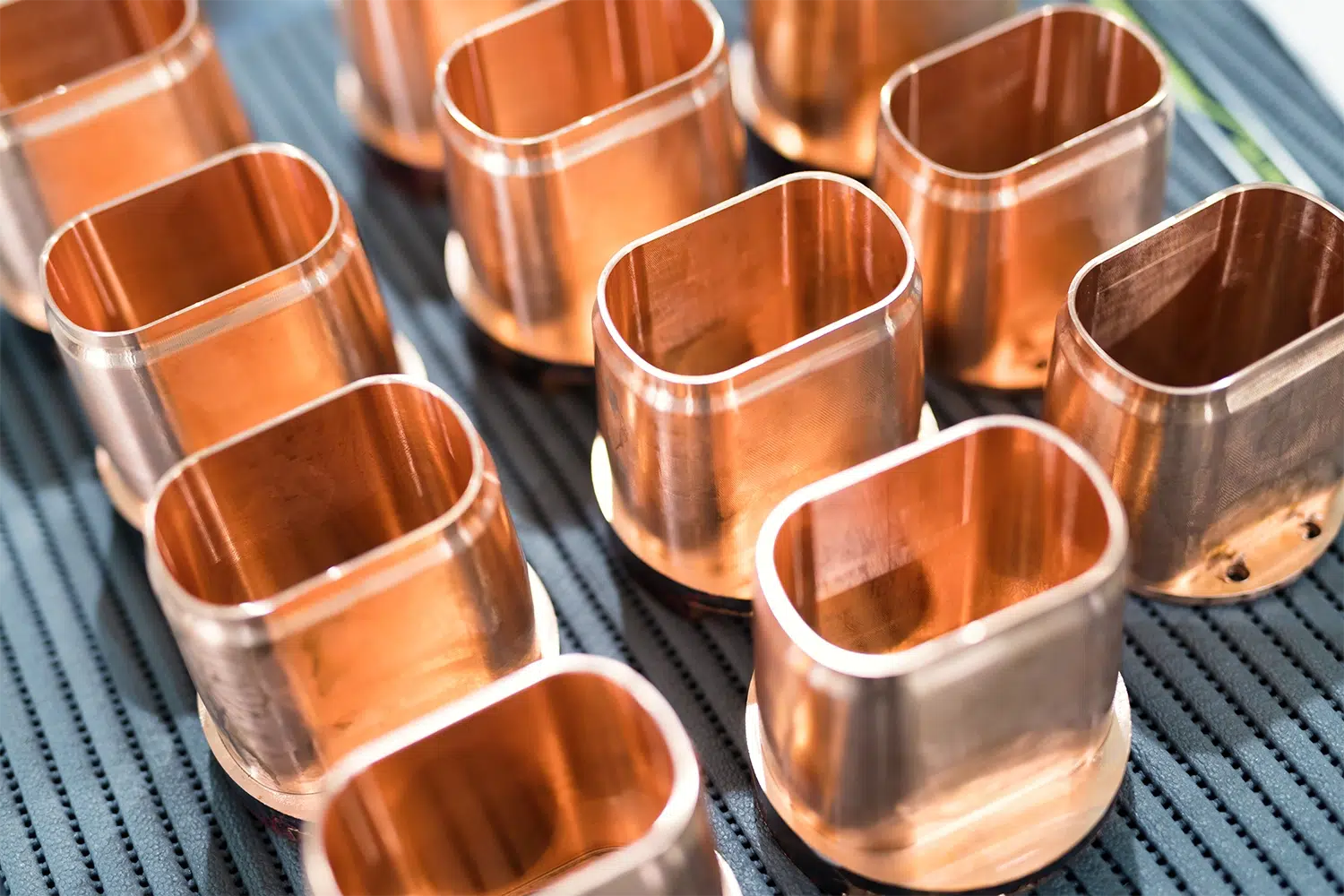
What is metal surface treatment?
Metal surface treatment refers to the various processes used to modify the surface properties of a metallic material. These treatments serve several purposes: corrosion resistance, improved electrical conductivity, enhanced aesthetics and finishes, and so on.
At Wipelec, we specialize in a variety of metal surface treatment processes.
Electrolytic nickel plating
Electrolytic nickel plating
Tinning
Metalizing plastics
Copper plating
Alodine 1200
Electrolytic copper plating
Electrolytic copper plating
Silver plating
Industrial gilding
Surtec 650
The Benefits of Metal Surface Treatment
Surface treatment plays a vital role in many industries due to the wide range of its applications and the benefits it provides to materials.
In demanding industries such as the automotive and aerospace sectors, the reliability and durability of parts are key factors. Without proper surface preparation, materials can be susceptible to corrosion, oxidation, or adhesion issues, which can compromise their performance and longevity.
For most industries, surface treatment offers five benefits:
- Improve electrical conductivity by making certain surfaces conductive or insulating, depending on the project's requirements.
- Effectively prepare surfaces prior to further processing by removing residues, contaminants, oxidation marks, or old coatings to ensure optimal cleanliness.
- Enhance the aesthetic appeal of rooms with high-quality finishes that improve the appearance, texture, or visual appeal of surfaces.
- Enhance the durability and reliability of components by minimizing wear, abrasion, and chemical and environmental damage.
- Improve the adhesion of coatings by modifying the physical and chemical properties of surfaces prior to the application of paints, treatments, or specific protective coatings.
The relevant industries
Surface treatment meets the needs of many industries, ranging from luxury goods to aerospace, energy, and the medical industry.
Here are a few examples of the sectors involved:
- Automotive industry: Surface treatment protects parts from corrosion, reduces wear, and improves their aesthetic finish.
- Aerospace industry: It helps enhance the resistance of components to mechanical, thermal, and environmental stresses.
- Electrical and electronics industry: Surface treatments improve electrical conductivity, insulation, and protection of sensitive components.
- Medical industry: They are used to ensure the biocompatibility of medical devices and to guarantee their resistance to corrosion and chemicals.
- Luxury industry: In watchmaking, jewelry, and high-end products, surface treatment provides precise and aesthetically pleasing finishes.
These examples illustrate just a few of the many applications of surface treatment, which is now indispensable in numerous industrial sectors.

How do you choose the right surface treatment method?
Choosing the most suitable surface treatment for a project depends on many factors. Each part has its own specific requirements: the type of material, the operating environment, the level of wear and tear, exposure to moisture or chemicals, finishing requirements, and expected performance.
For example, certain treatments are preferred to enhance corrosion resistance, while others are used to improve a coating’s adhesion, electrical conductivity, or a part’s aesthetic appearance. Industry-specific requirements are also taken into account, particularly in demanding sectors such as aerospace, medical, and automotive.
Material type
Certain surface treatments are specifically designed to work with specific materials, whether they are alloys, polymers, or specific metal parts. Each material has different chemical and mechanical properties, which directly influence the choice of process to be used.
For example, treatments used on aluminum may not necessarily be suitable for stainless steel or titanium.
The choice of treatment also depends on the desired performance characteristics: corrosion protection, wear resistance, electrical conductivity, insulation, improved adhesion, or surface finish quality. An inappropriate treatment can reduce the part’s durability or compromise its effectiveness over time.
It is therefore essential to select a solution that is compatible with the material used and the project’s requirements in order to ensure reliable, durable results that meet the application’s specifications.
Desired properties
It is essential to clearly define the properties that the surface treatment must impart to the part. Each process has specific characteristics that meet different technical, aesthetic, or functional requirements.
For example, chemical nickel plating is particularly valued for its resistance to wear and corrosion, as well as its ability to produce a uniform coating, even on complex parts. Electrolytic nickel plating, on the other hand, enhances the aesthetic appearance of parts while improving their protection and conductivity.
Ready to discuss surface treatment for your parts?
Our team is here to assist you with any questions, design inquiries, or requests for quotes. We support you from the design phase—through our engineering department—all the way through to mass production.

Terms of Use for the Room
The conditions under which parts are usedalso play a key role in the choice of surface treatment. Depending on the environment in which the components will operate, certain solutions will be more suitable for ensuring their durability, performance, and long-term resistance.
For example, parts exposed to moisture, salt, or harsh chemicals require treatments that can minimize the risk of corrosion and oxidation. Processes such as electroless nickel plating, Alodine 1200, or Surtec are commonly used to enhance the protection of metal surfaces in demanding environments.
Finally, the properties of the material itself must be taken into account. Metal parts, specific alloys, and metallized plastics do not respond in the same way to surface treatments. It is therefore essential to select a process that is perfectly suited to the intended environment and the technical requirements of the project.
Cost and duration of treatments
Finally, it is important to consider the cost-effectiveness of the chosen surface treatment. A process that is less expensive in the short term is not always the most cost-effective in the long run. Some treatments require a larger initial investment but can significantly reduce maintenance costs, the risk of deterioration, and the frequency of part replacement.
For example, treatments such as electroless nickel plating offer excellent resistance to wear and corrosion, thereby extending the service life of components in demanding environments. Meanwhile, processes such as Alodine 1200 or Surtec provide long-lasting protection for metal surfaces while minimizing the risk of oxidation.
The choice of a surface treatment must therefore be evaluated holistically, taking into account not only the initial cost but also the long-term savings: reduced wear, improved reliability, fewer maintenance operations, and extended service life of components.
An analysis of the total cost of ownership (TCO) thus makes it possible to select the most appropriate solution based on technical constraints, performance objectives, and the project budget.
In summary
| Treatment | Description | Key Benefits | Applications |
|---|---|---|---|
| Tinning | Applying a tin coating to metal parts to improve their protection and conductivity | Corrosion resistance, excellent weldability, good conductivity | Electronics, connectivity, aerospace, defense |
| Silver plating | Deposition of metal to improve electrical and thermal properties | Very high conductivity, oxidation resistance, electrical performance | Electronics, aerospace, telecommunications, defense |
| Metalizing plastics | Applying a metallic coating to plastic parts | Metallic appearance, conductivity, improved surface strength | Automotive, electronics, medical, industrial design |
| Electrolytic copper plating | Electrolytic copper plating on metal parts | High electrical conductivity, excellent adhesion | Electronics, circuits, telecommunications |
| Electrolytic copper plating | Electroless copper plating | Uniform coating, processing of complex geometries | Electronics, microtechnology, connectivity |
| Electrolytic nickel plating | Uniform nickel deposition without electrolysis | Corrosion and wear resistance, high hardness | Precision engineering, medical, aerospace |
| Electrolytic nickel plating | Electrolytic deposition of nickel on metal surfaces | Corrosion protection, mechanical strength, uniform finish | Mechanical engineering, aerospace, electronics |
| Gold | Technical or functional gold plating on metal parts | Optimal conductivity, excellent resistance to oxidation | Aerospace, precision electronics, high-performance connectors |
| Alodine 1200 | Chemical conversion treatment primarily for aluminum | Corrosion protection, improved paint adhesion | Aeronautics, defense, automotive |
| Surtec | Hexavalent chromium-free conversion coating for light metals | Environmentally friendly corrosion protection, regulatory compliance | Aeronautics, electronics, industry |
Conclusion
Metal surface treatment is a critical step in many industrial projects. As we have seen, it enhances the appearance, durability, corrosion resistance, and technical properties of metal parts to meet the specific requirements of each application.
Thanks to our expertise in a wide range of surface treatment processes, we are able to meet the specific requirements of many industrial sectors.
Whether in the medical, aerospace, electronics, or luxury goods industries, surface treatment plays a key role in the manufacture of high-performance, durable parts. Since every project is unique, we work closely with our clients to select the solution best suited to the technical, environmental, and aesthetic requirements of their parts.