
Stainless Steel Machining
Everything You Need to Know About Stainless Steel Machining
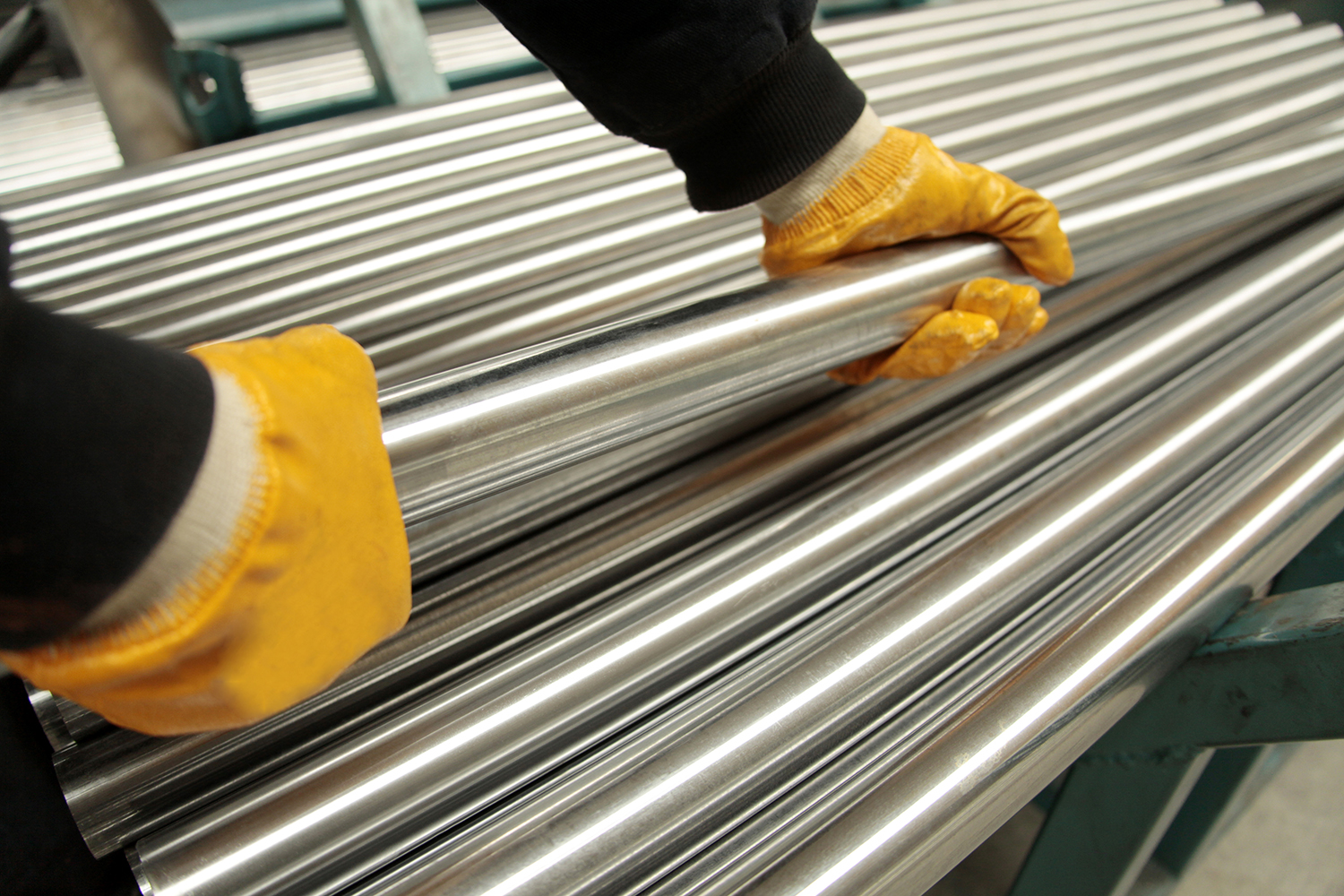
Stainless steel machining enables the production of precise, strong, and durable metal parts for demanding industrial applications. Thanks to its corrosion resistance and mechanical properties, stainless steel is used in many industries where component reliability is essential.
However, stainless steel is not always an easy material to machine. Its behavior during cutting requires careful controlof machining parameters, tool selection, chip removal, and material heating.
To obtain a stainless steel part that complies with the drawing, tolerances, and requirements of your application, choosing the right machining partner is therefore crucial. We manufacture precision stainless steel mechanical parts— from prototypes to small and medium-volume production runs—with quality control and production carried out in France.
What is stainless steel machining?
Stainless steel machining involves removing material to produce a part with the geometry, dimensions, and finish required by the project.
Depending on the part to be manufactured, various processes may be used: milling, turning, drilling, grinding, or even wire EDM for certain complex geometries.
At Wipelec, precision machining relies in particular on high-precision CNC machining centers, CNC lathes, and wire EDM equipment. This combination enables us to produce complex metal components with a high degree of precision and repeatability. We can achieve tolerances as tight as one-hundredth of a millimeter, depending on the technical requirements of the part.
Why choose stainless steel for a machined part?
Stainless steel is chosen when the part's characteristics must meet specific requirements.
Long-Term Durability
Mechanical Strength
Suitable for a wide range of industries
Corrosion resistance
Why does machining stainless steel require specialized expertise?
Stainless steel can be more difficult to machine than materials that are easier to cut. During machining, several factors must be controlled.
- Warm-up: The heat generated during cutting can cause a significant rise in temperature in the machining zone. Failure to properly control cutting conditions can then affect tool life and part quality.
- Work hardening: Certain grades of stainless steel tend to undergo work hardening when deformed. The material may then become more difficult to machine if the cutting conditions are not properly adjusted.
- Tool Wear: Choosing the right tool, its geometry, and cutting parameters is essential for maintaining consistent production and minimizing wear.
- Burr and Chip Formation: Chip management and burr control are also important for producing a clean part that meets the requirements of the drawing. Machining stainless steel is therefore not simply a matter of removing material: it involves controlling a set of parameters to ensure the part’s precision, repeatability, and final quality.
What kinds of parts can be manufactured through stainless steel machining?
Stainless steel machining makes it possible to produce a wide variety of mechanical components. Depending on the geometry and project requirements, it is possible to manufacture, among other things:
- precision mechanical parts
- prototype parts
- components for small- and medium-volume production runs
- complex machined parts
- parts that require strict dimensional tolerances
- components designed for harsh industrial environments
The choice of process depends on the geometry, the grade of stainless steel, the tolerances, the desired surface finish, and the production volume. At Wipelec, the engineering department can get involved as early as the design phase to analyze the drawings, assess feasibility, and identify suitable manufacturing solutions.
The main machining methods
Steel machining is carried out using various processes, each with specific applications and facing different constraints. The main methods include material removal processes, such as bar turning, turning, and milling.
CNC Milling
Milling stainless steel makes it possible to produce parts with complex shapes, pockets, grooves, flat surfaces, or various geometries that require high precision.
The use of CNC machines makes it possible to program machining paths and reproduce operations with a high degree of consistency.
Milling is particularly well-suited when the workpiece has a complex geometry or when multiple operations must be performed with precise dimensional requirements.
Wire EDM
For certain parts with complex shapes or specific dimensional requirements, wire electrical discharge machining (EDM) serves as a complementary solution to traditional machining.
We use this process to produce complex shapes with high precision. Wire-cut EDM can be used, in particular, on conductive materials that are difficult to machine using conventional methods.
CNC Turning
Stainless steel turning is suitable for parts with cylindrical or rotationally symmetric shapes.
In particular, this technique is used to manufacture various mechanical components such as pins, shafts, bushings, spacers, and other turned parts.
We have digital lathes as part of our precision machinery fleet.
Why should you entrust us with your stainless steel machining?
Choosing a subcontractor for a stainless steel part involves more than just finding a machine capable of machining the material.You also need to be able to rely on a partner who can understand your needs, analyze feasibility, meet the specifications outlined in the drawings, and inspect the parts produced.
We draw on several strengths:
- Expertise in precision engineering
- A well-suited fleet of machinery
- Support from the design phase onward
- A French production
- An approach tailored to industrial projects
- Complementary processes

Everything You Need to Know About Stainless Steel Machining
Do you have questions about stainless steel machining? Find the answers to the most frequently asked questions here!
Why is stainless steel difficult to machine?
Certain grades of stainless steel may be more difficult to machine due to factors such as overheating, work hardening, burr formation, and tool wear. Cutting conditions must therefore be adapted to the grade and geometry of the workpiece.
Does Wipelec produce stainless steel prototypes?
We canproduce prototypes as well as small- and medium-volume runs, using an approach that allows us to verify feasibility before launching production.
Can a surface treatment be applied after machining stainless steel?
Depending on your needs, we offer degreasing, stripping, and passivation services in addition to our machining services.
In which industries are machined stainless steel parts used?
Machined stainless steel parts can be used in many industrial sectors.
- Medical: The medical sector requires components that meet high standards for precision, quality, and reliability.
- Aeronautics and Aerospace: Components designed for the aeronautics and aerospace industries are subject to stringent requirements regarding performance, traceability, and reliability.
- Defense: Defense applications require components that are suited to specific environments and operating conditions.
- Automotive: The automotive industry uses many precision metal components in its mechanical systems and technical equipment.
- Research and Electronics: Laboratories, research centers, and electronics manufacturers may need prototype parts or miniaturized components manufactured to precise tolerances.
What is the difference between machining stainless steel and machining steel?
Machining stainless steel is generally more challenging than machining steel. Certain grades, such as 304 and 316L stainless steel, tend to work harden: the material hardens when subjected to pressure from the tool. It is therefore essential to make a clean cut and avoid simply rubbing the tool against the material.
Stainless steel also dissipates heat less effectively than steel, which can lead to greater heat buildup and accelerate tool wear. It is generally necessary to adjust the cutting speeds, feed rates, depth of cut, and coolant flow.
When machining stainless steel, it is best to use suitable carbide tools, maintain a controlled cutting speed, and ensure effective lubrication. As a general guideline, cutting speeds can range from 150 to 250 m/min for mild steel, compared to approximately 80 to 180 m/min for 304/316L austenitic stainless steel, depending on the tool and machining conditions.
In summary, steel is generally easier to machine, while stainless steel requires a greater degree of control over cutting parameters, tooling, and heat management.
Do you have a question about stainless steel machining? Need a quote? Feel free to contact us.
Our Contact Information
Would you like to learn more about our machining solutions? Feel free to contact us by phone or through our contact form.