
Steel Machining
Everything You Need to Know About Steel Machining
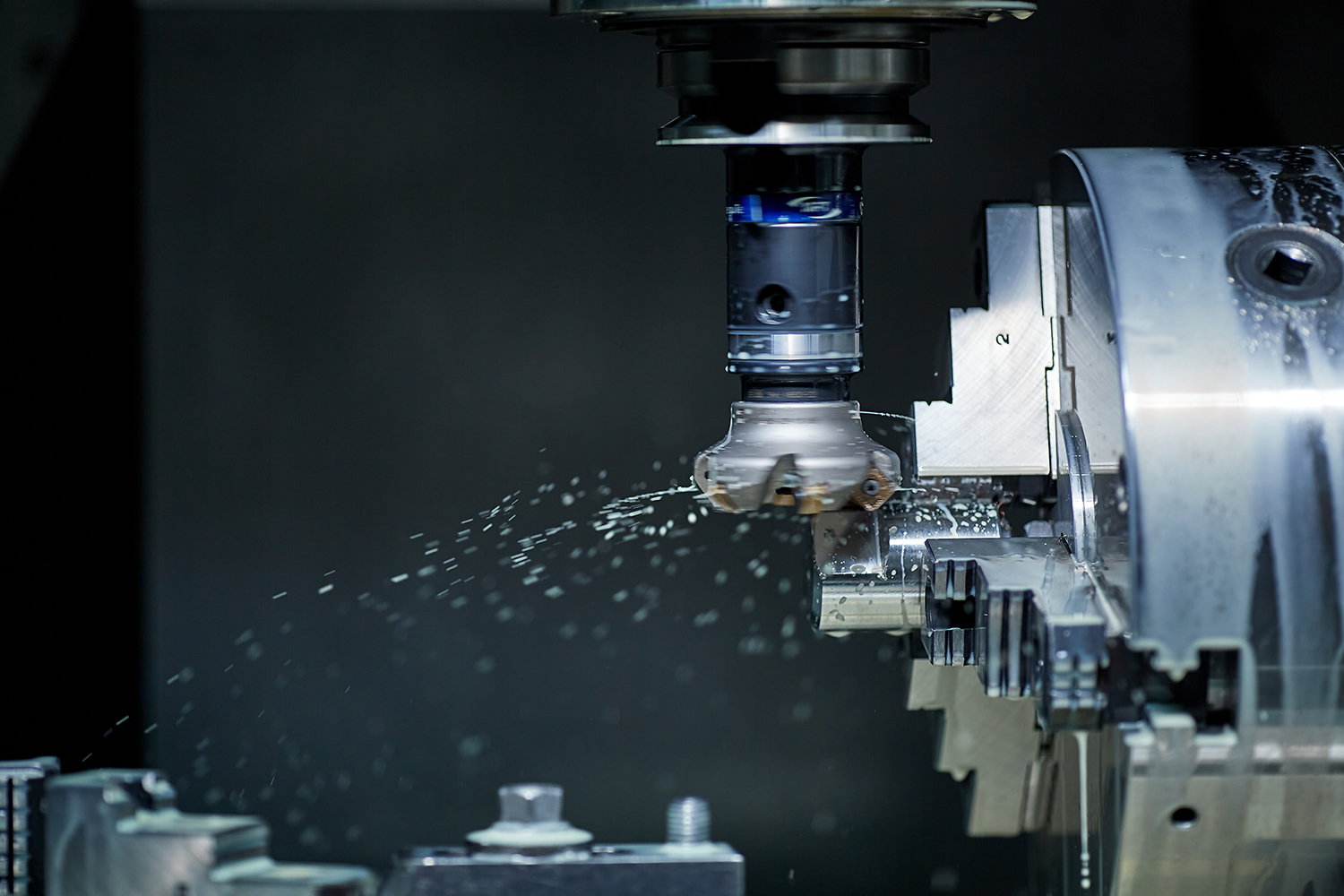
Steel machining encompasses all the processes used to transform raw material into a mechanical part with the desired dimensions and geometry. Starting with a bar, block, or other metal blank, material is progressively removed to obtain a part that conforms to the design and technical requirements of the project.
Steel, a material widely used in industry, offers numerous mechanical properties that make it suitable for demanding applications. Its strength and the variety of grades available make it ideal for manufacturing many mechanical components and technical parts. However, some steel grades can be more difficult to machine and require careful selection of tools, cutting parameters, and equipment.
Stainless steel, on the other hand, possesses specific characteristics, notably good resistance to corrosion and oxidation. Machining it requires particular attention to control cutting forces, heat generation, and surface finish. The choice of process must take into account the grade of stainless steel and the desired characteristics of the final part.
Processes adapted to each piece
The success of precision machining depends not only on the machine used. Project preparation, drawing analysis, tool selection, and the definition of machining parameters also play a crucial role. A cylindrical part can be primarily machined by turning, while a part with pockets, grooves, or complex shapes may require CNC milling. For certain geometries or difficult-to-machine steels, wire electrical discharge machining (EDM) can be a particularly suitable solution.
At Wipelec, the choice of technology is made according to the characteristics of each part and the customer's requirements. With over 40 years of experience in machining, we rely on various production methods to manufacture technical parts with a high level of precision.
The Different Types of Machined Steel
At Wipelec, we work with different grades of steel, selected according to the characteristics of each part and the project requirements. Hardness, mechanical strength, composition, and material condition are all parameters that can influence the choice of process and manufacturing conditions. A thorough understanding of the properties of each steel allows us to adapt the tools, cutting parameters, and technology used to obtain a part that meets the desired dimensions, tolerances, and surface finish.
Austenitic steel
Composed primarily of chromium and nickel, austenitic stainless steels are particularly valued for their corrosion resistance, good ductility, and mechanical properties. They are commonly used when durability and surface finish quality are important.
Grades 304 and 316 are among the most commonly used. Their low carbon content in certain grades enhances their corrosion resistance. During machining, it is necessary to adjust the cutting parameters to limit heating and work hardening of the material.
Ferritic steel
Ferritic steels typically contain between 10.5% and 30% chromium , with a relatively low carbon content. They offer good corrosion resistance and desirable mechanical properties, while generally remaining more economical than some other types of stainless steel. Unlike austenitic steels, ferritic steels are magnetic .
Martensitic steel
Martensitic stainless steels typically contain around 12% chromium and can have a carbon content of up to approximately 1.2%, depending on the grade. Their structure allows them to be hardened by heat treatment, resulting in good hardness and high mechanical strength.
They are notably used for the manufacture of knives, medical instruments, blades and mechanical parts requiring good wear resistance.
Duplex steel
Duplex steels combine an austenitic and ferritic structure, giving them good mechanical strength and corrosion resistance. Rich in chromium and containing molybdenum, they exhibit, in particular, better resistance to stress corrosion cracking in certain chlorinated environments than common austenitic stainless steels such as 304 and 316.
Their composition and unique structure make them particularly well-suited to demanding industrial environments. However, their machining requires specific parameters to control cutting forces and heat generation.
Precipitation-hardening stainless steel
Precipitation-hardening (PH) stainless steels combine good corrosion resistance with high mechanical strength. Their composition may include chromium and nickel , as well as elements such as copper, aluminum, titanium, or niobium. A specific heat treatment enhances their hardness and mechanical properties.
These steels are particularly well-suited to applications requiring strength, hardness, and corrosion resistance. However, their metallurgical state must be considered during machining to adapt the tools and cutting parameters accordingly.
The main machining methods
Steel machining is carried out using various processes, each with specific applications and facing different constraints. The main methods include material removal processes, such as bar turning, turning, and milling.
CNC Milling
Machining of complex shapes, pockets, grooves, surfaces and contours on steel parts.
Wire EDM
Production of complex geometries in conductive steels, particularly when the hardness of the material or the required precision makes conventional machining less suitable.
Correction
Finishing operations to obtain precise dimensions and a surface finish adapted to the requirements of the part.
CNC Turning
Production of cylindrical parts and surfaces using precision CNC lathes.
The steps in the steel machining process
Machining a steel part requires several steps, from needs analysis to final inspection. At Wipelec, each operation is defined according to the steel grade, the part geometry, tolerances, and the desired level of finish.
Study of the plan and definition of the need
The process begins with the analysis of the plan or 3D file of the part. The technical characteristics are studied: dimensions, tolerances, geometry, surface finish and specific requirements.
This step helps to determine the most suitable machining process and to anticipate any constraints related to the material.
Material selection and part preparation
The steel grade is selected based on the mechanical properties and requirements of the part. The blank is then prepared to the dimensions required for machining operations.
Programming and preparation of machining
Based on the technical data of the part, the machining operations are defined and programmed on the numerically controlled equipment.
The choice of tools, cutting parameters and the order of operations makes it possible to obtain the desired geometry while controlling the precision and surface finish.
Machining the part
Depending on the geometry and specifications of the part, several processes can be used:
- CNC turning for cylindrical shapes
- CNC milling for complex surfaces, grooves, pockets and geometries
- drilling for making holes and bores
- Wire electrical discharge machining (EDM) for certain complex shapes or materials that are difficult to machine.
- grinding for operations requiring high finishing and dimensional accuracy
Several processes can be combined to obtain the final part.
Finishing and additional operations
After the main machining, finishing operations can be carried out to obtain the required dimensions, tolerances and surface finishes.
The nature of these operations depends on the specifications of the plan and the functional requirements of the part.
Quality Control
The machined part is then inspected to verify its conformity to the defined requirements. Dimensions, tolerances, and geometric characteristics are checked using appropriate inspection equipment. This step ensures the conformity of the parts before delivery.
The machines and technologies used in steel machining
Machining steel requires equipment capable of guaranteeing precision, repeatability and quality of finish, including for parts with complex geometries or tight tolerances.
At Wipelec, machining operations rely primarily on CNC machining centers, CNC lathes, and wire EDM machines. These technologies allow the machining process to be adapted to the characteristics of each part and the grade of steel used.
Milling and turning allow for the precise creation of various part shapes and surfaces , while wire electrical discharge machining (EDM) offers a suitable solution for certain complex geometries and difficult-to-machine steels. Depending on the project requirements, these different processes can be combined to achieve the expected level of precision, finish, and conformity.
The main challenges of machining steel
Steel is a robust and durable material, but these characteristics can also make machining it more demanding. To obtain a precise part that conforms to the design, it is therefore important to master each step of the process.
- Tool wear : certain steel grades put significant stress on cutting tools. Therefore, it is necessary to choose appropriate tools and adjust machining parameters to limit wear while maintaining good precision.
- Heat management : Machining generates heat, particularly during contact between the tool and the material. If this heat is not properly controlled, it can impact the workpiece and its surface finish. Cutting parameters and, when necessary, the use of a cutting fluid allow for better temperature control.
- Vibration control : During machining, vibrations can compromise part quality and leave defects on machined surfaces. Proper workpiece support, a suitable machine, and precise settings are essential to ensure stable machining.
- Adherence to tolerances : some steel parts require high dimensional accuracy. Each operation must therefore be carried out carefully to respect the dimensions, tolerances, and surface finish defined on the drawing.
At Wipelec, the choice of process, tools and machining parameters is thus adapted to the characteristics of each part in order to meet the precision requirements of the project.
Specialists in steel machining for over 40 years
For over 40 years, we have supported our clients in the production of machined parts, leveraging expertise developed over time. This experience allows us to work with various grades of steel and select the most suitable processes for each project, based on geometry, tolerances, and finishing requirements. From part design to machining and inspection, we dedicate our expertise to delivering reliable parts that meet defined specifications.

Everything You Need to Know About Steel Machining
Do you have questions about steel machining? Find answers to frequently asked questions here!
What types of steel parts can be machined?
At Wipelec, steel machining allows us to produce a wide variety of technical parts, from simple components to more complex geometries.
Depending on the requirements, we can machine mechanical parts, precision components, individual parts, or small batches, adapting the process to the specific characteristics of each project. Turning, milling, wire EDM, and finishing operations allow us to meet a variety of requirements in terms of dimensions, tolerances, and surface finish.
With over 40 years of experience in machining, we support our clients in choosing the most suitable technical solution for their steel part.
What grades of steel can be machined at Wipelec?
Machining possibilities depend on the grade of steel, its hardness and its condition.
We work with different grades of steel and adapt our methods according to the material's properties. The choice of tools, cutting parameters, and process allows us to take into account the specific constraints of each steel. For a specific project, the study of the design and the material enables us to determine the most appropriate machining solution.
What is the difference between turning and milling steel?
Steel turning is particularly suited to cylindrical parts or parts of revolution . The part is rotated on a lathe while a tool progressively removes material.
Steel milling, on the other hand, uses a rotary tool to machine various surfaces, grooves, pockets, or complex shapes.
These two processes can be complementary and used successively to produce the same part.
Can hardened steel be machined?
Yes, some techniques are particularly suited to hardened steels or materials with high hardness.
At Wipelec, wire electro-erosion can be used in particular to create complex contours and geometries in conductive materials that are difficult to machine with conventional processes.
The choice of technology depends, however, on the geometry of the part, its level of hardness and the required tolerances.
What level of precision can be achieved when machining steel?
The accuracy achieved depends on numerous parameters: the process used, the steel grade, the geometry of the part, the dimensions, and the tolerances specified in the drawing . Precision equipment and control of machining parameters make it possible to produce parts that meet high dimensional requirements.
Thanks to our processes, tolerances can reach 0.01 mm in certain configurations , depending on the part and the process chosen.
Do I need to provide a plan to have a steel part machined?
A technical drawing or a 3D file allows us to precisely define the characteristics of the part and facilitates its study. It can specify, in particular , the dimensions, tolerances, surface finish, and the material to be used.
When the project presents particular constraints, these elements also help to determine the most suitable machining processes.
We can therefore study the need based on the technical documents you provide.
A question? A quote? Don't hesitate to contact us.
Our Contact Information
Would you like to learn more about our machining solutions? Feel free to contact us by phone or through our contact form.